Gas fireplaces are great. They provide heat and ambiance, and they’re often the focal point of a room. We have them in a large percentage of new Minnesota homes, and many homeowners have gas fireplace inserts installed in their existing wood-burning fireplaces because of the convenience factor; it’s so much easier to flip a switch than to build a fire. As such, we inspect them every day. Today, I’ll cover what we do from a home inspection perspective. But first, let’s define what I’m talking about.
What is a gas fireplace?
There are two types of gas fireplaces defined by the code book, aka the International Residential Code:
“DECORATIVE APPLIANCE, VENTED. A vented appliance wherein the primary function lies in the aesthetic effect of the flames.”
“DECORATIVE APPLIANCES FOR INSTALLATION IN VENTED FIREPLACES. A vented appliance designed for installation within the fire chamber of a vented fireplace, wherein the primary function lies in the aesthetic effect of the flames.” We call them gas inserts.
Tracking? It’s the two devices I mentioned at the beginning. They typically have a glass front, and they’re usually direct-vent appliances, meaning they get all of their combustion air from the outdoors, the combustion area is sealed off from the rest of the house, and they’re vented directly to the outdoors. Some are built into a wall, and others are free-standing appliances.
The following appliances are NOT gas fireplaces:
- A gas log fireplace. This is a gas log installed in a wood-burning fireplace. You can reach your hand into the fireplace and touch the flames.
- A gas log lighter. It’s basically a pipe stick with a bunch of holes, connected to a gas line inside a wood-burning fireplace. It’s used to get a wood fire started.
- An unvented gas space heater. At a glance, these may look similar to a gas fireplace. But these draw their combustion air from the home and are vented back into the home.
Visual Inspection
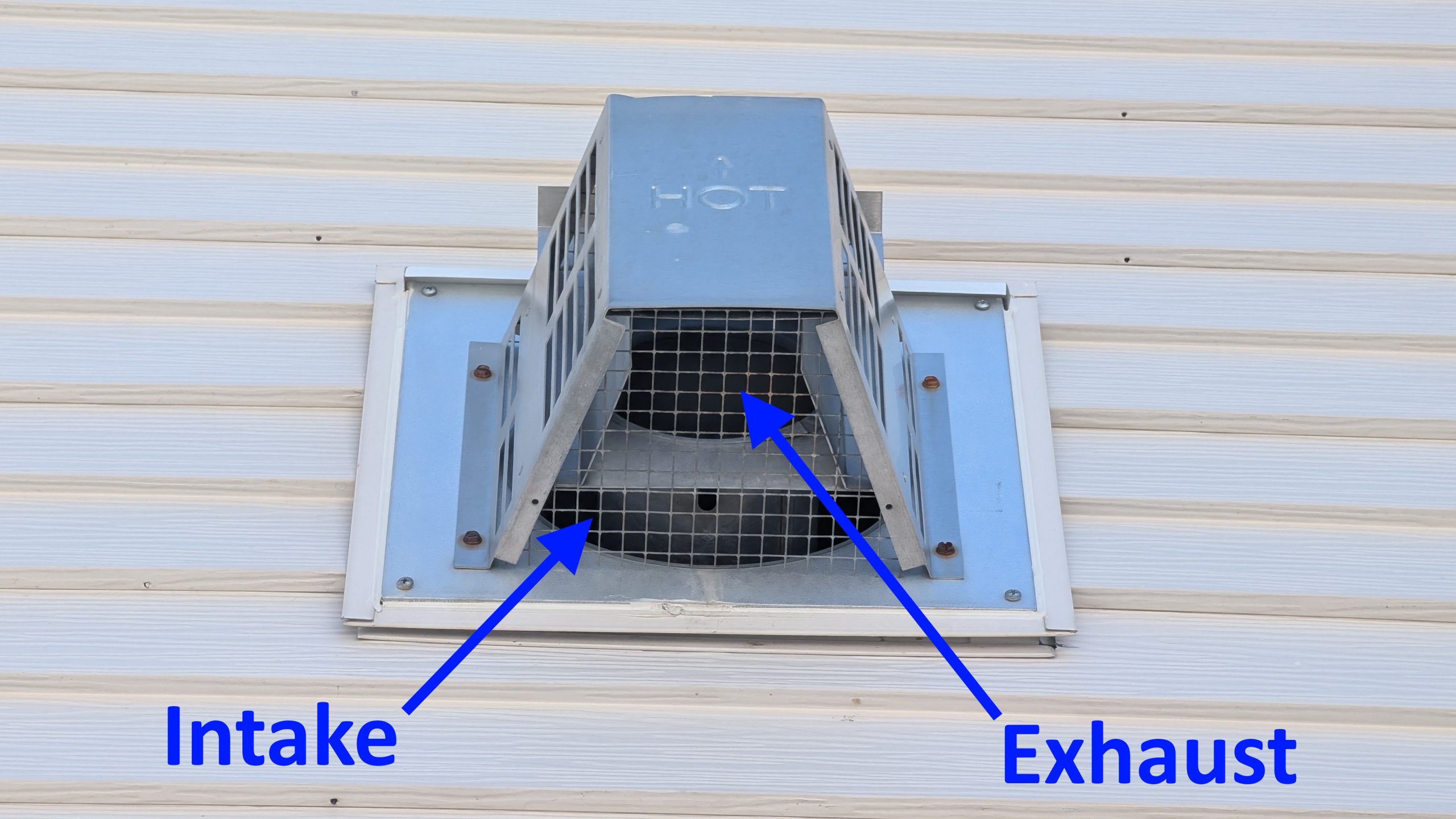
Our inspection of a gas fireplace usually begins with the vent terminal at the exterior of the home. This will either come through the roof or through the side of the house. If it’s a gas insert, the vent will come through the chimney. The photo below shows a common vent terminal on the side of the house. If you look carefully, you’ll see this is a two-pipe system; the outer pipe brings combustion air into the fireplace, and the inner pipe vents exhaust gases.
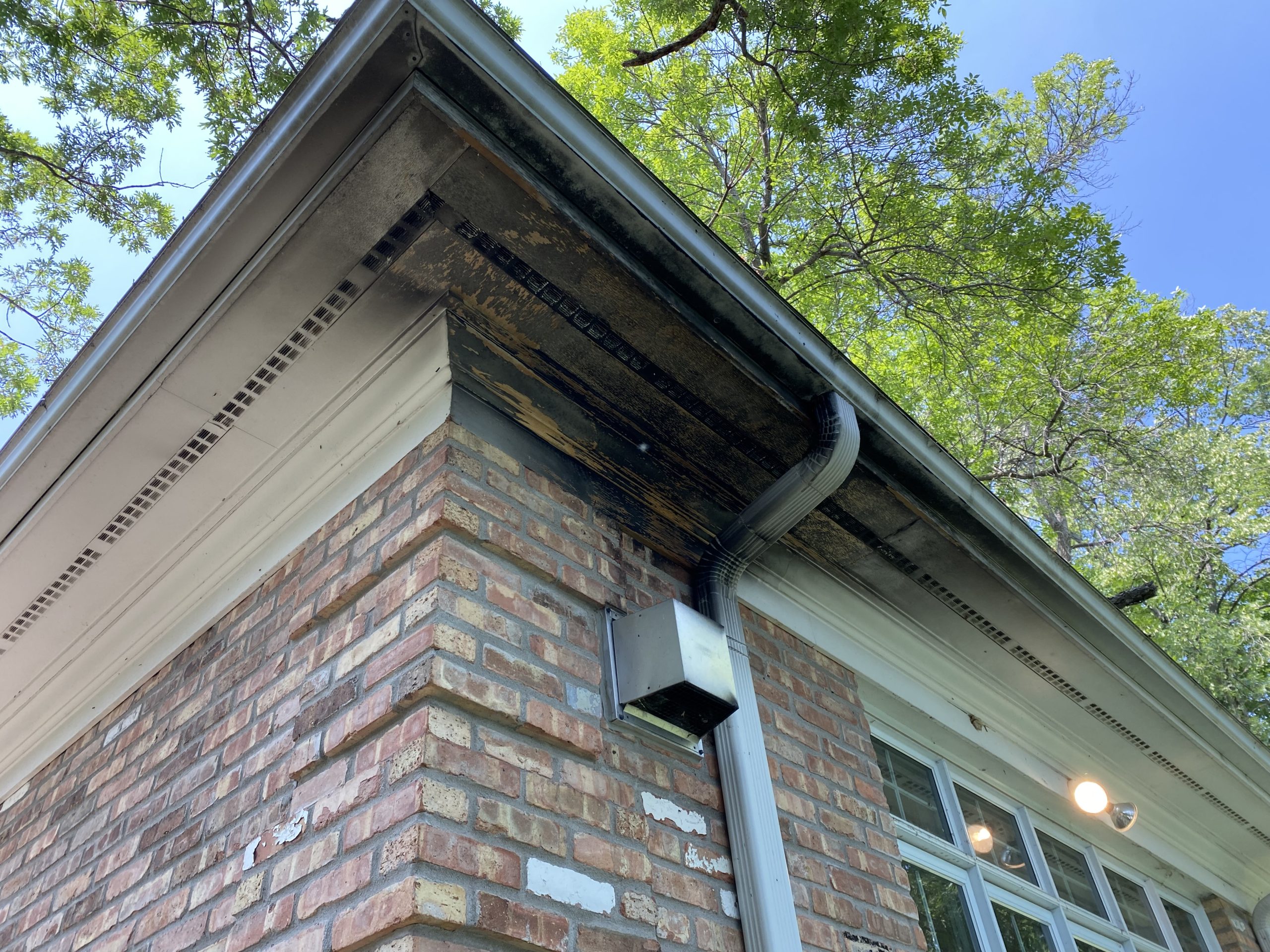
If we find black soot around this terminal, it means the fireplace isn’t burning properly, and it needs service. The photo below is a dramatic example of this.
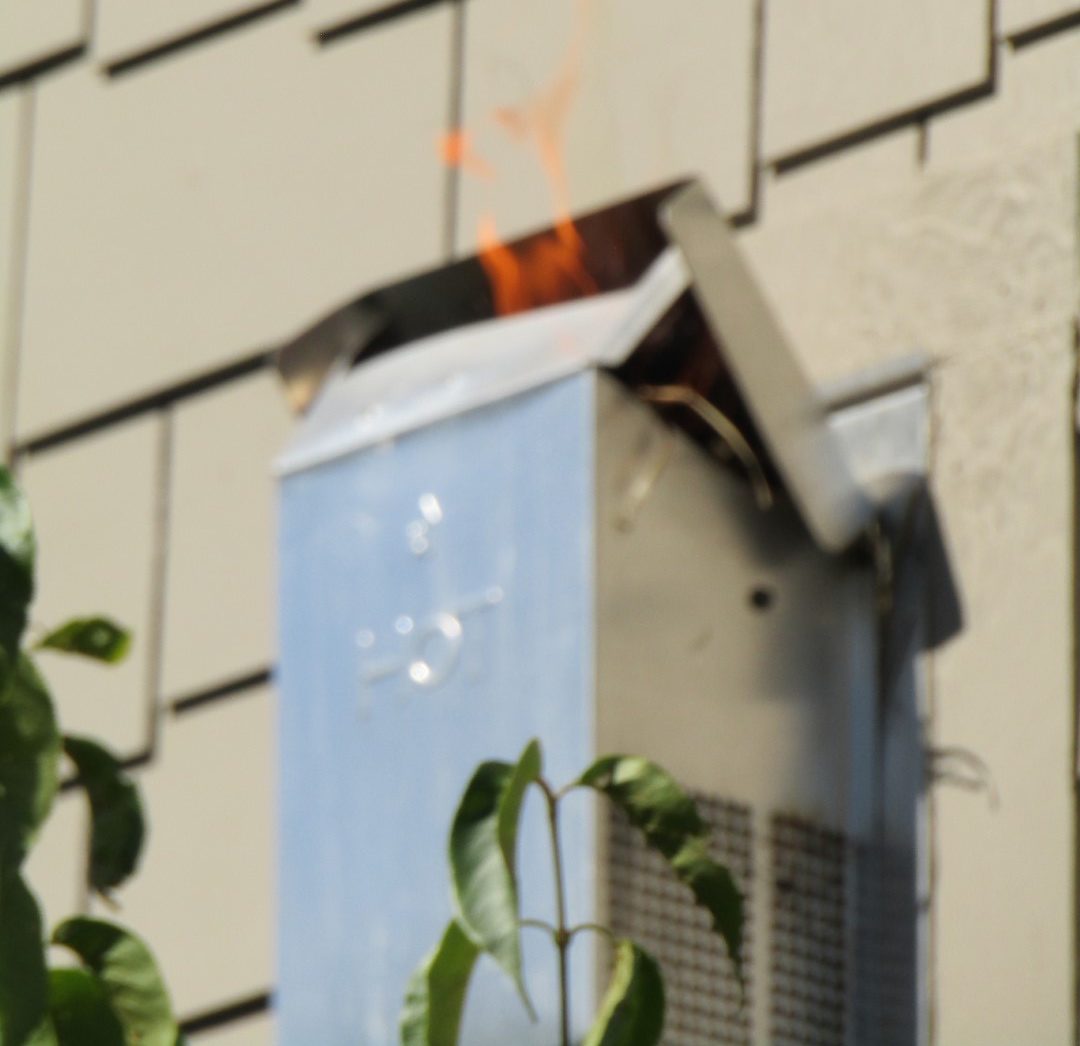
And we also learned the hard way to check for nest material in the vent before operating the fireplace. That stuff can easily catch fire. Sorry for the blurry photo, but our inspector was moving very quickly to put out this fire before it got out of control. Some quick thinking and a nearby garden hose may have prevented the house from catching fire.
For the fireplace itself, we check a few other things:
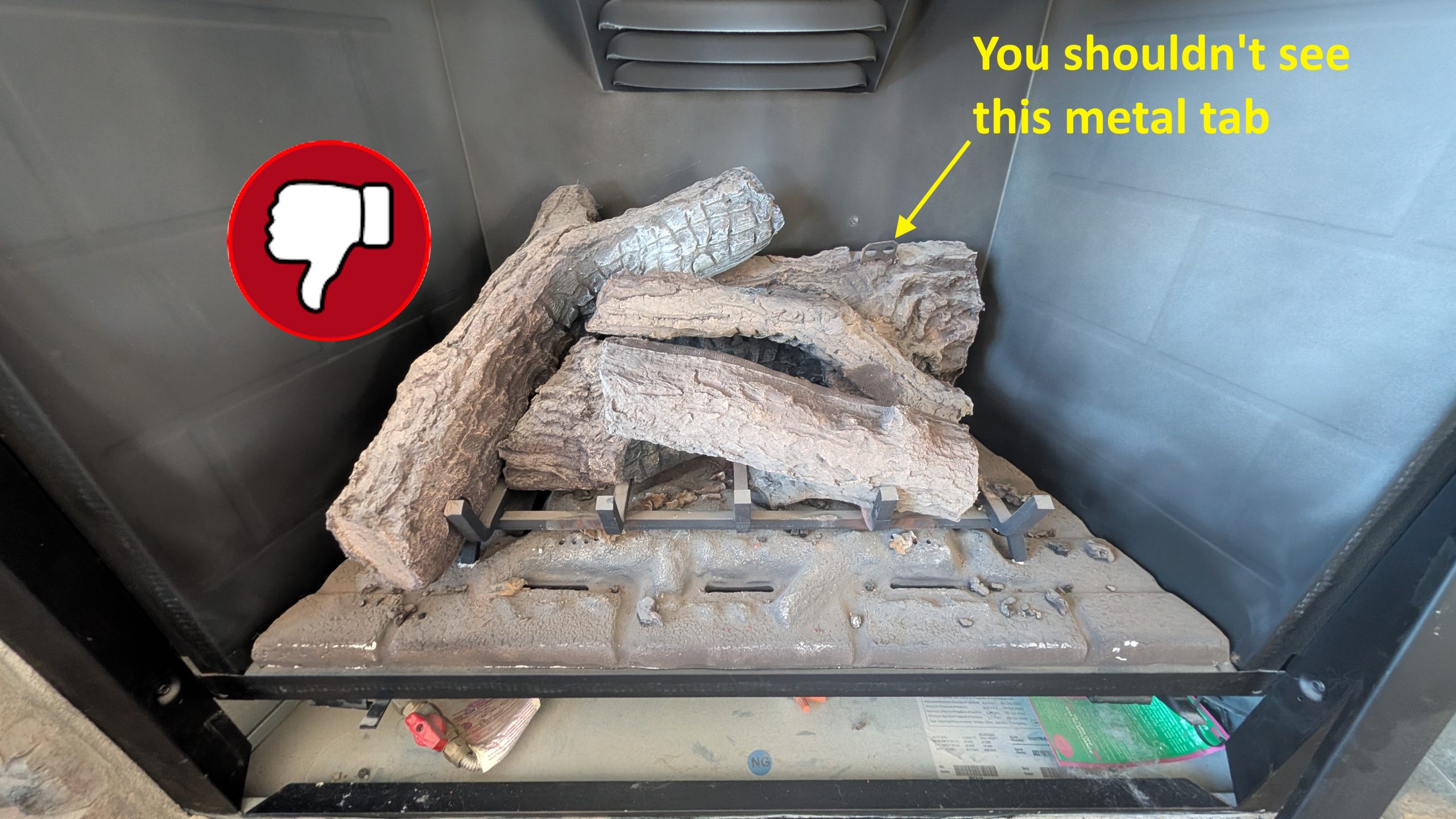
Are the logs arranged properly? Manufacturers have a specific way for the logs to fit together; if they’re not situated properly, the flames will be improperly impinged, leading to incomplete combustion and build-up of black soot.
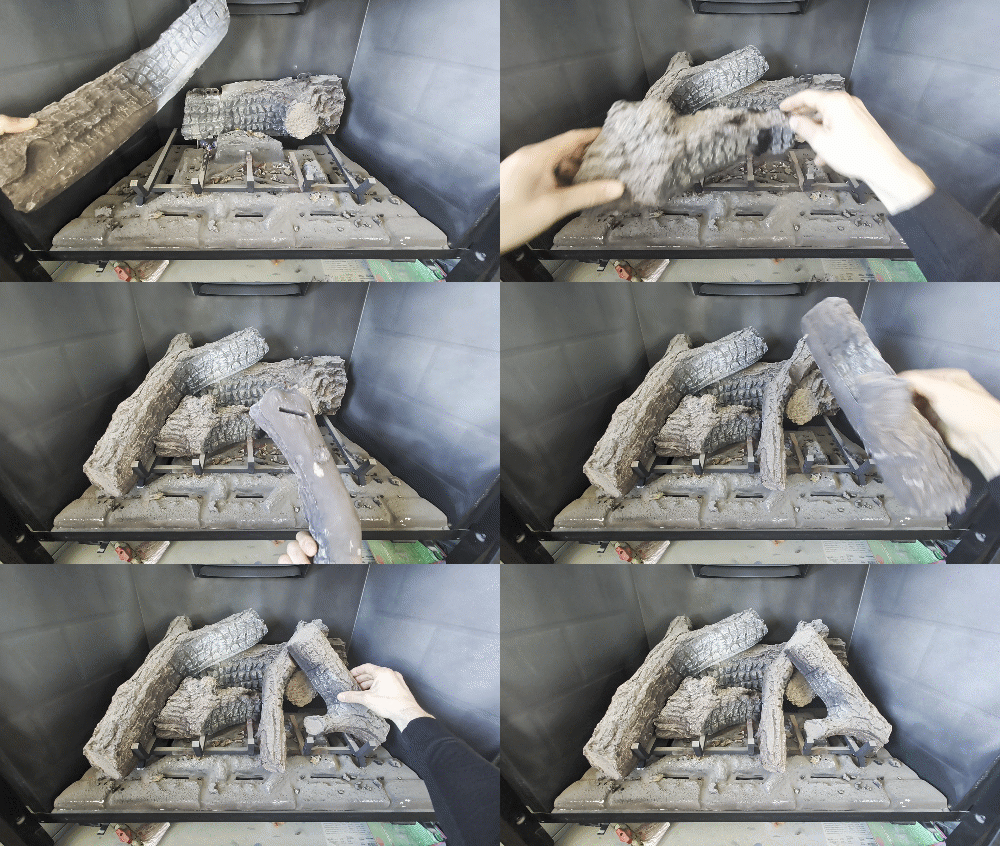
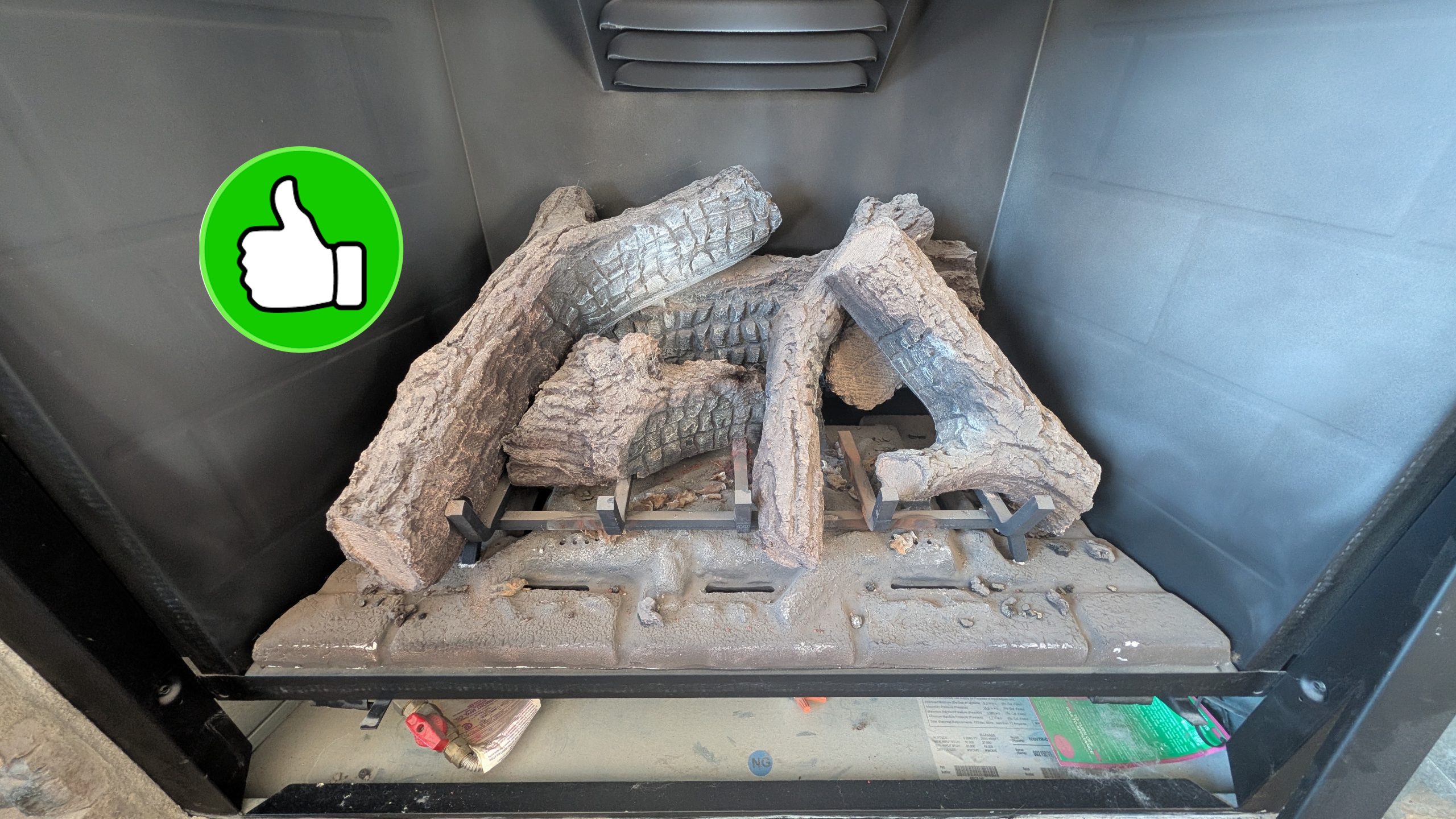
It’s not always easy to spot this defect, but a couple of clues would be heavy black soot on the logs or exposed metal tabs.
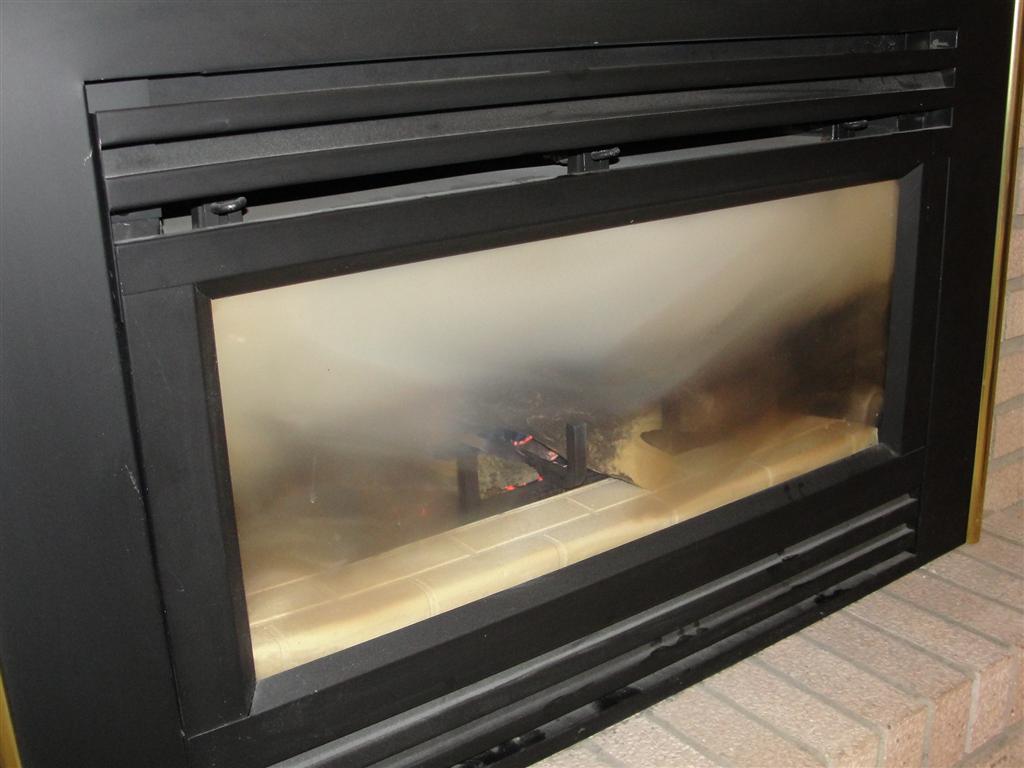
Is the glass hazy? This isn’t a huge deal, but it doesn’t look great, and it’s not a big deal to clean the class. When it’s hazy, we recommend cleaning it.
Is there a safety screen in place? The glass on gas fireplaces gets scary-hot, enough to cause life-altering injuries to toddlers.
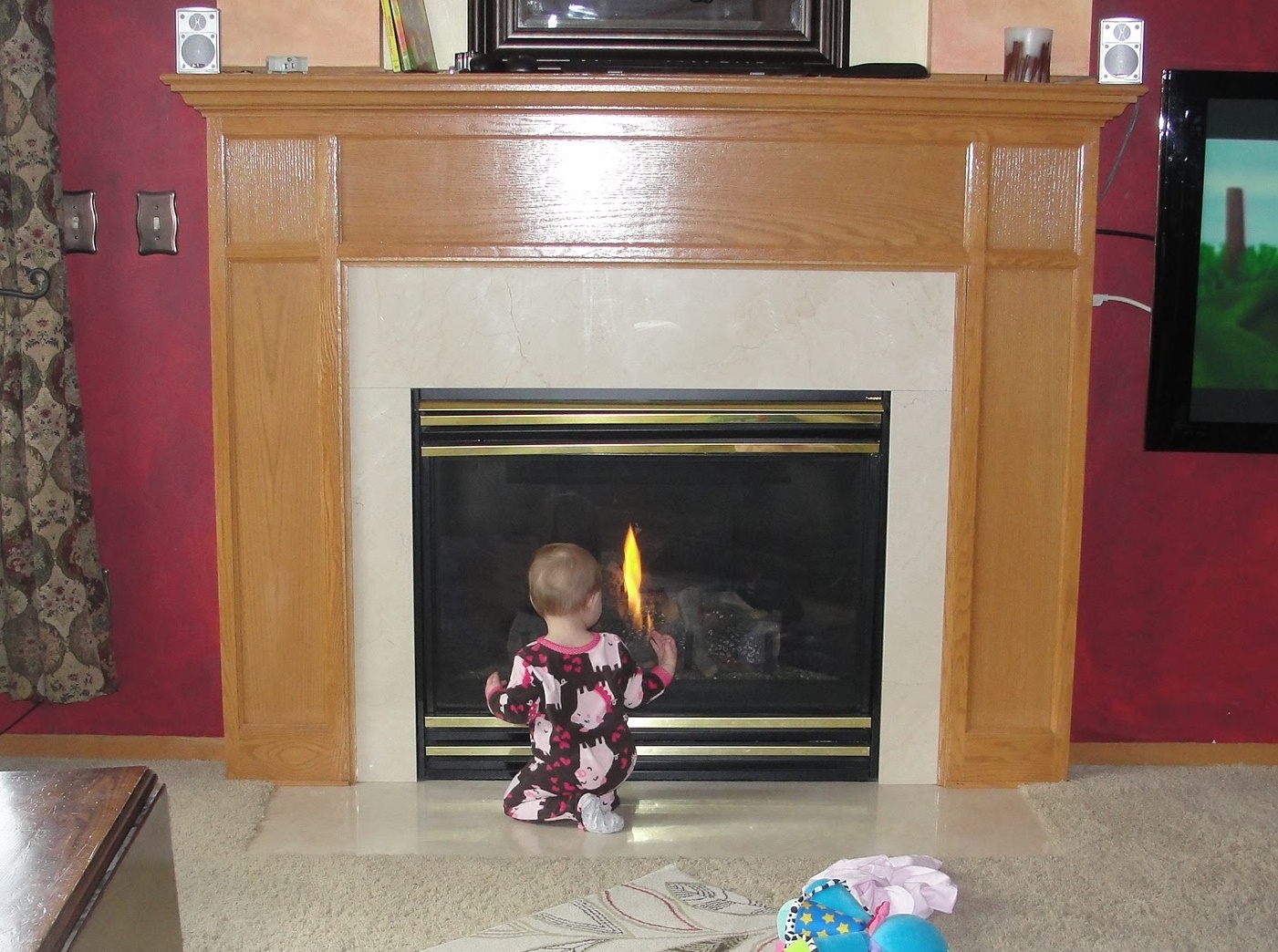
For this reason, we recommend adding a fireplace safety screen if it’s not present. These screens have been mandatory since 2015. For more on this topic, check out Child safety tip: get a safety screen for your gas fireplace.
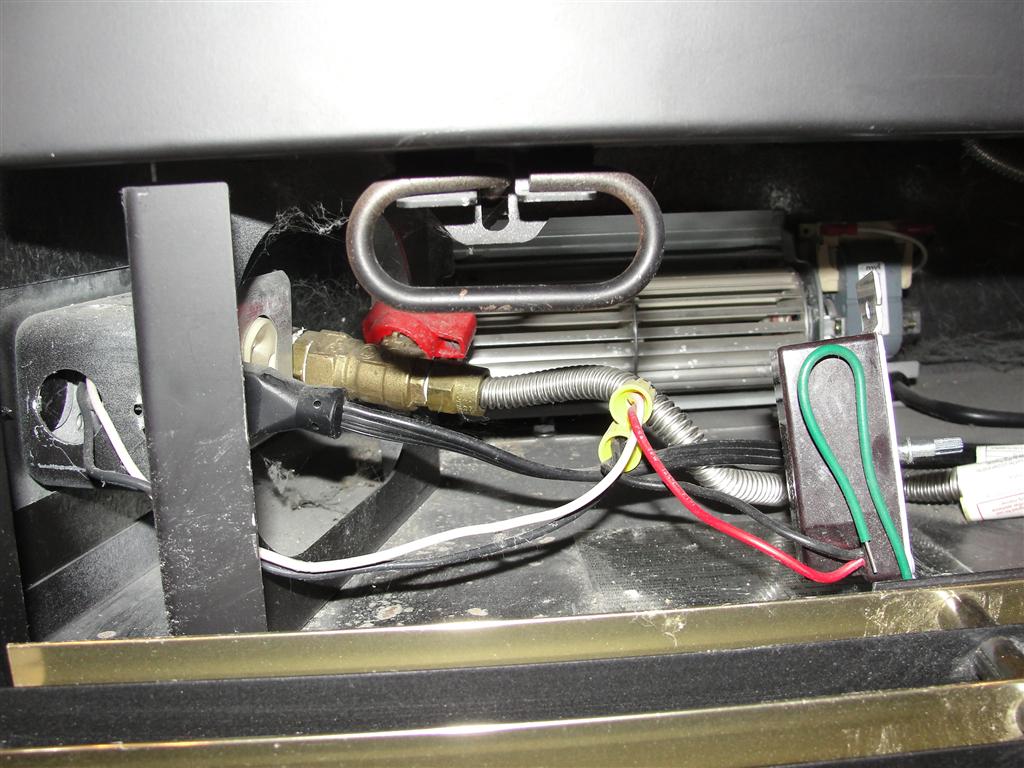
Does everything look good under the hood? Most gas fireplaces have a small access door that swings up to access the gas valve, pilot controls, and wiring. The photo below shows open-spliced wiring where someone improperly installed a fan motor control.
Testing for operation
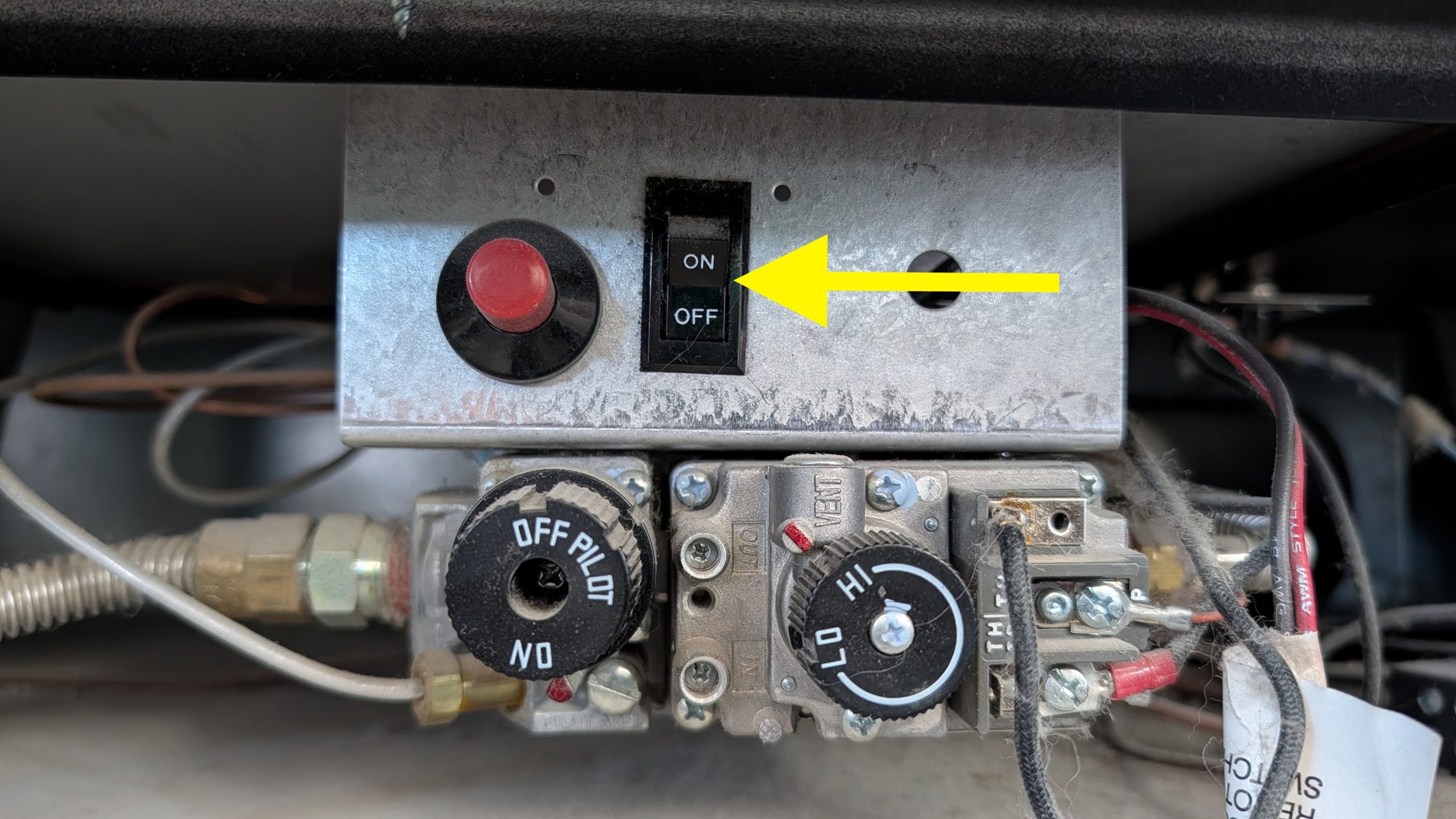
Once we’ve done our visual inspection, we turn on the fireplace using normal operating controls. This is typically a switch on the wall, a thermostat on the wall, or a remote control. If we can’t find any of those things, we can usually operate the fireplace manually through a switch behind the cover.
If the pilot isn’t lit, our official policy is to not light the pilot. That’s not to say never, but we always send out an email to the seller’s agent before the inspection, asking the seller to ensure all pilots are lit before we arrive. For instructions on how to safely light a pilot light, check out my blog post on this: Q&A: How do I light my gas fireplace?
Testing for exhaust gas leakage
When a gas fireplace is operating, all combustion air comes from outside, and all exhaust gas is supposed to vent outside. But that’s not always the case. We find many gas fireplaces that leak exhaust back into the home. To test for this, we basically do the same thing as a worst-case scenario draft test on a water heater. This means we keep all the windows and doors closed and run everything that removes air from the house. This includes things like the bathroom exhaust fans, the kitchen exhaust fan, and the clothes dryer. Even with all of this stuff running, a fireplace should not leak hazardous exhaust gas into the home.
To test for this, we use a combustible gas detector, such as the TIF8900 (which is no longer made), or the TPI 720b, which happens to be my new favorite (see Combustible Gas Detectors). We do this by running our detector around the outside of the glass seal. If we find something, we follow up by testing with a combustion analyzer to be 100% sure we’ve found a leak. And if it leaks, it needs service.
Special rules for testing exhaust gas
There are a few special rules we need to follow when testing for exhaust gas leakage. First, a gas fireplace must be operated for at least 8 hours prior to this test to allow the unit to fully cure. This means we do not do this test on new-construction homes.
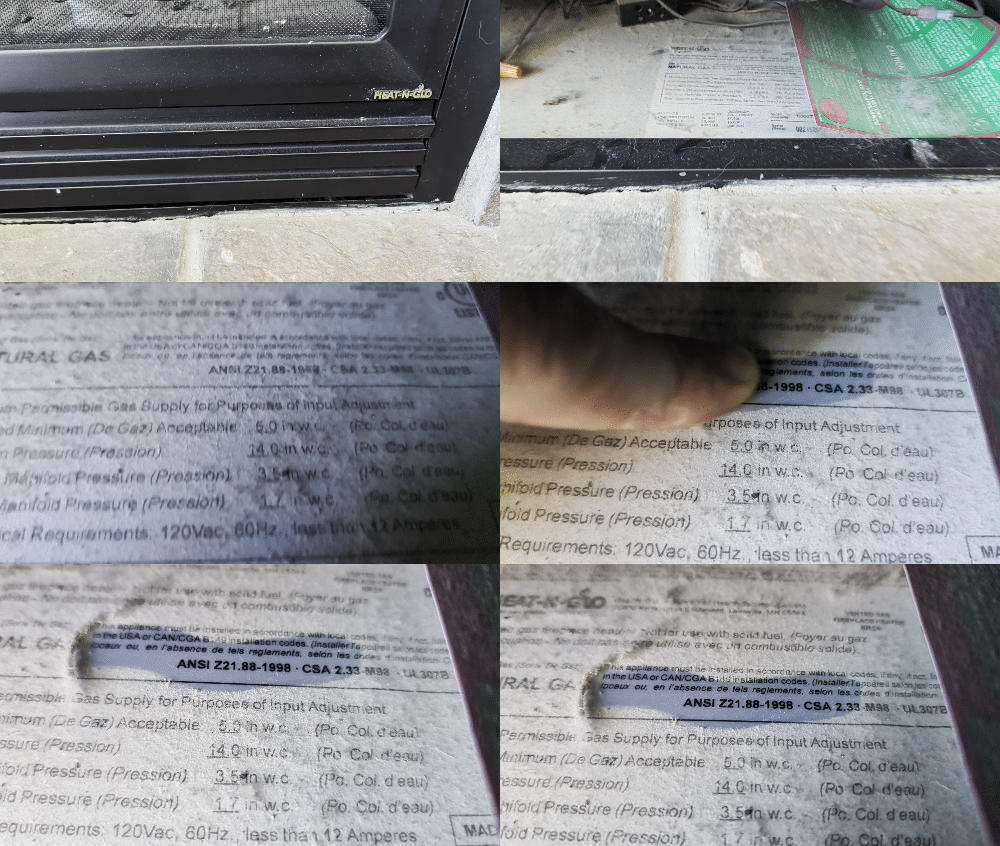
Second, the gas fireplace needs to run for a while before testing. How long? That depends on the ANSI standard it was tested and certified to. If it’s ANSI Z21.50, the fireplace needs to run for 45 minutes before testing. For ANSI Z21.88, it must run for at least 15 minutes before testing. Some of the inspectors on my team simply run them all of them for 45 minutes to be certain.
What’s the difference between ANSI standards Z21.50 and Z21.88? On paper, an appliance listed to Z21.50 is for decoration only, while Z21.88 is also intended to provide heat. You’re not supposed to use a thermostat to control a fireplace tested to Z21.50, but it’s fine for Z21.88. In reality, these appliances are identical. At least, that’s my reality. The only way I can tell the difference between the two is to look at the data tag. I spoke with some gas fireplace experts trying to nail down the exact difference between these two fireplaces, and they insisted that the only difference is the testing they go through.