
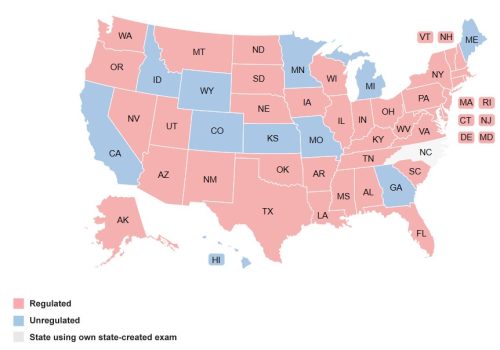
How do you train to be a home inspector? I blogged on this in 2011, 2016, and 2020. And it’s time for another update, because this is one of the most common questions I get as a home inspection company owner. All of this advice is tailored for someone in an unregulated state, such as Minnesota (or CA, ID, WY, CO, KS, MO, MI, GA, ME, or HI). If you’re in a regulated state, you also need to research your specific state requirements. Start with the National Home Inspector Exam website, which has helpful links for every state.
Before I get into all of the FAQs, however, let me ask you a question first. Do you want to work for yourself or for someone else? There are pros and cons to each. I discussed this in last week’s blog post, Should You Join a Multi-Inspector Company or Start Your Own Inspection Business?
Q: How can I learn to be a home inspector?
A: Start with a school. That’ll make up about 5% of what you’ll need to know. The rest of it you’ll need to learn in the field by working alongside an experienced home inspector.
Q: What’s the best home inspection school?
A: I’ve only attended one home inspector training school, and it was in 2004. I took a weeklong course and wasn’t impressed, so I won’t share the school’s name. I’ve heard good things about The ASHI School from home inspectors who have completed that training, but I have no firsthand experience with the school. I have people on my team who have attended Inspection Certification Associates and Kaplan, and they spoke highly of both schools.
But as I said, a home inspection school is only the tip of the iceberg. You need to do a tremendous amount of self-study and attend a large number of home inspections with intentionality before even approaching competency.
Q: How can I get hands-on home inspection training?
A: Home inspection schools often include some hands-on training, but it’s minimal. To gain real-world home inspection experience, you need to attend home inspections with experienced home inspectors who are willing to teach. I only know of two ways to do this: reach out to home inspectors and ask them to teach you, or get hired by another home inspection company that will give you the training.
Getting hired by a home inspection company that will give you training is pretty straightforward, but reaching out to strangers to learn this business and risk being viewed as a competitor is downright scary for a lot of people.
If I were trying to get into this business and wanted training from an experienced home inspector, I’d hit the phones hard. I’d call every home inspector in my area until I found someone who was willing to train me, and I’d be prepared for a lot of rejection. But eventually, I’d surely find someone. I’d offer to be an assistant inspector in exchange for the opportunity to learn. I don’t know any home inspector who wouldn’t want someone to set up their ladder, turn the dryer on, and get a towel out of my truck (quickly!), etc.
If I couldn’t find someone who was interested in that proposition, I’d offer to pay to learn. If you end up spending $100 per ride-along inspection and attend 100 home inspections to get a good grasp of what you’re supposed to be doing, I’d call that a bargain.
Oh, and by the way, many home inspectors get “funny” about allowing ridealongs because they’re afraid they’ll be training their competition. This is partly true, but in a larger market like the Twin Cities, having a few more home inspectors enter the business won’t ever make a bit of difference to me. Thousands of houses are sold every month here in the Twin Cities. If a new home inspector enters the market and instantly starts doing two home inspections a day, would I ever feel that impact? No way. I’ve found that I learn a lot while teaching others, however. If someone is going to enter this business, I’d rather they be a competitor who does things the same way that I do and charges a similar fee; not some hack who charges $200 and gets their home inspections done in an hour. When we all do better, we all do better. A rising tide lifts all boats.
Q: Do you hire and train people without home inspection experience?
A: For sure. We prefer to hire people with a strong background in the building trades, but that’s not a requirement. We hire for personality and the ability to learn. Check out our employment page for more info.
Q: How long does it take to train a new home inspector?
A: I’ve heard of some companies training people in just a few weeks, and I think that’s ludicrous. Here at Structure Tech, we have an intensive training program to get people out in the field within 3 to 4 months.
Q: What are the physical requirements to be a home inspector?
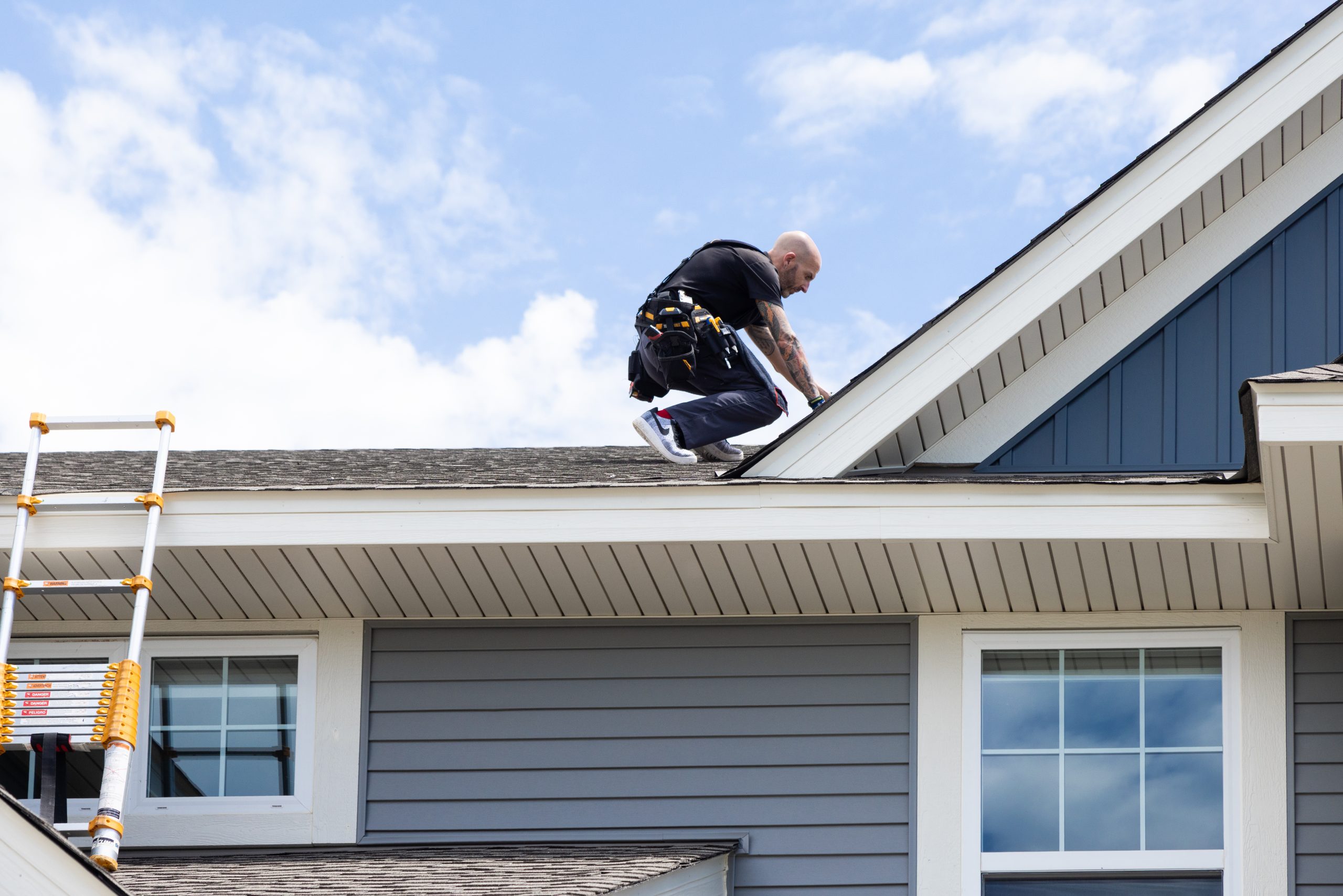
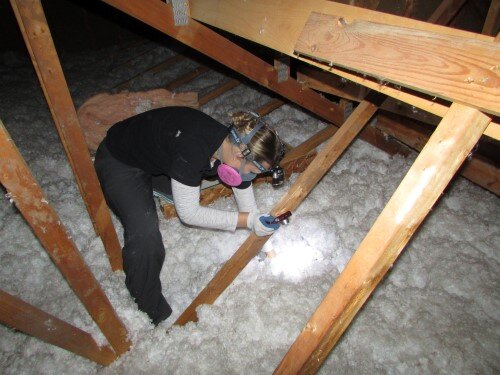
A: Less than most trades, more than most desk jobs. My humble opinion is that you must be comfortable walking roofs with a 6/12 pitch, be able to carry a 28′ extension ladder, be comfortable climbing around in attics, constantly bending over, climbing into and out of window wells, under sinks, and crawling around in crawlspaces. Those aren’t requirements to enter this profession, and home inspectors are not required to walk roofs or climb through attics, but I think that anyone who is unable or unwilling to perform those tasks would have a very hard time establishing themselves in this profession, partly because there are plenty of other people in this profession who are willing and able to do those things.
Q: What are the licensing requirements for home inspectors in Minnesota?
A: There is no such thing as licensing here in Minnesota. Most states have it; we don’t.
Q: What study materials do you recommend to be a home inspector?
A: As long as you’re already here on my blog, start with this. I’ve painstakingly reviewed every blog post I’ve ever written, and I’ve categorized all of the blog posts that new home inspectors at my company need to read. Check out our Home Inspector Study Guide.

- Also, pick up a copy of the National Home Inspector Exam (NHIE) Home Inspection Manual and do the practice quizzes. This exam is used in most states with home inspector regulation (the red states below) and is also used by the American Society of Home Inspectors (ASHI) as a prerequisite for achieving “ASHI Certified Inspector” status.
- The Prescriptive Residential Deck Construction Guide – to quote myself, this should be required reading material for anyone who builds or inspects decks. The building code is quite difficult to fully follow and understand when building a deck, but this guide has compiled all the building code requirements scattered throughout the IRC into one location.
- Electrical Inspection of Existing Dwellings – I call this the home inspector’s Bible for electrical inspections. Every home inspector ought to own this book. You should read, re-read, and keep this book handy for reference. Even if you’re well-versed in electrical codes, you’ll find many helpful electrical history notes.
- Code Check books. There is no other quick-reference book that makes it easier to find the exact code requirements you’re looking for. These books reference national codes which are frequently changed at the state level, so they’re never 100% applicable, but they at least make it quick and easy to know where to look, and the illustrations are fantastic.
- For future home inspectors in Minnesota, get familiar with the Minnesota codes.
There is nothing Minnesota-specific related to electrical; we adopt the entire electrical code. Minnesota adopts the 2026 National Electrical Code on 8/17/26.
More Reading
As ongoing reading materials for all home inspectors, experienced or not, here is some of my favorite reading material for ongoing education:
- Building Science – this is a great resource for building science information. Subscribe to their newsletter at the bottom of their homepage.
- Energy Vanguard Blog – great blog about insulation, HVAC, building science, and the like. Go halfway down the page to subscribe.
- The Journal of Light Construction – I get the paper edition, but their website has lots of great info as well.
- The Family Handyman – this is also a great magazine for every motivated, handy homeowner. Again, I get the paper edition, but their website is excellent and seems to dominate search results related to all types of home improvement projects, and for good reason.
No responses to “Home Inspector Training Advice 2026”
No comments yet.
RSS feed for comments on this post. TrackBack URL
Leave a Reply