
Fall is officially here, so it’s time to get your house ready for winter. We’ve compiled a comprehensive list of fall home maintenance tasks to help you remember everything you need to do as a Minnesota homeowner.
I’m also including a podcast episode where we discuss most of the stuff on our list in depth.Water
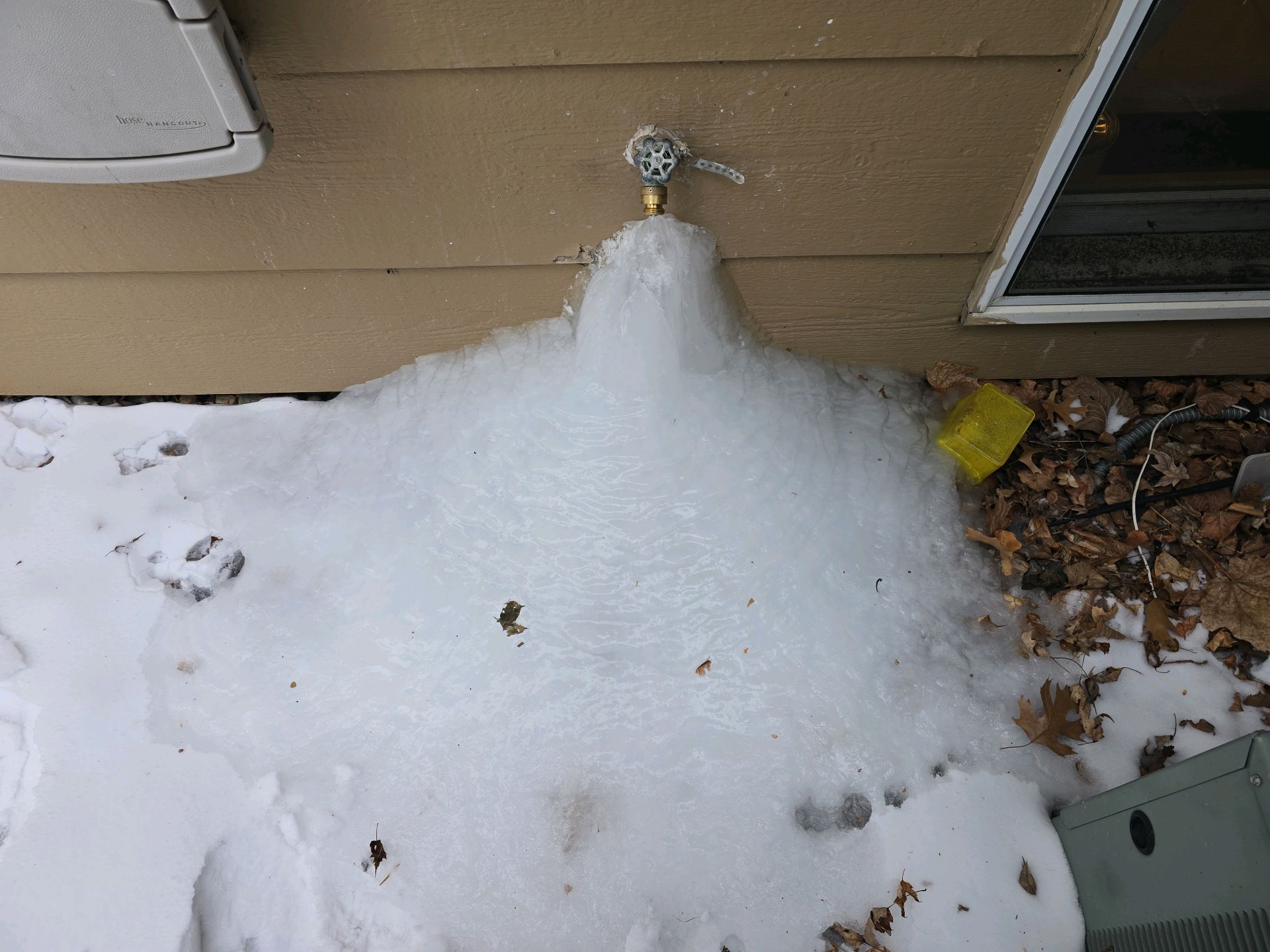
- Disconnect your garden hoses. If you leave them attached, even to a frost-free faucet, you risk a burst pipe.
- Drain water from your faucets. See How to Prevent Your Outside Faucets from Freezing.
- Remove any pond pumps and store them in your basement in a 5-gallon bucket filled with water. This will help prevent the seals from drying out.
- If you have a utility sink in your garage, drain the pipes and pour some RV antifreeze into the drain.
- If you have a lawn sprinkler system (aka “irrigation system”), drain it and blow it out with compressed air. Hire a pro to do this.
- Side note: If you hire a pro and they tell you your existing system also needs the backflow preventer tested, check the real requirements yourself: New backflow preventer testing requirements for Minnesota.
Air
- Clean the combustion air or makeup air intake vents.
- If you have an air exchange system, such as a heat recovery ventilator (HRV) or energy-recovery ventilator (ERV), clean it. Regular HRV/ERV maintenance includes cleaning the exterior intake, filters, and core. See HRV maintenance.
- Clean the clothes dryer duct. The exterior damper should move freely and close properly. See dryer duct maintenance.
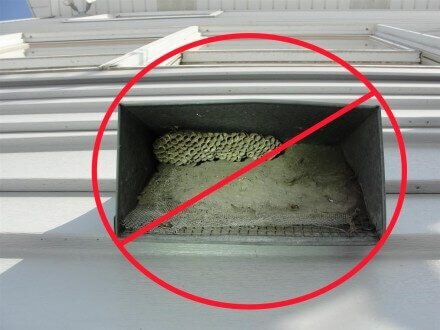
- Check the bathroom and kitchen exhaust dampers for wasp nests. Nests in these terminals will prevent the dampers from opening. See Bath Fan Terminal Inspections.
Roof
- Clean the soffit vents. They are located under the roof overhangs and can become clogged with lint, dust, insulation, and paint.
- Check the roof vents for bird nests. You can typically see them from the ground.
- Clean the gutters after all the leaves have fallen. Even with gutter guards, make sure your valleys aren’t blocked.
- If the downspouts or sump pumps drain into an underground system, redirect them to drain to the ground surface when feasible. See Sump Pump Discharge.
Air Conditioner
- Outdoor covers are NOT necessary. If you want a cover, get one that covers the top of the unit, not a full enclosure.
- If the furnace or water heater vent blows exhaust gas onto the air conditioner, a plastic cover can shield it from the corrosive exhaust gases.
- Don’t cover heat pumps. Heat pumps are not common in Minnesota, but they’re increasing in popularity.
General Exterior
- Seal gaps around the home ‘envelope’ and check for loose or dried-out caulking around pipes, ducts, faucets, air conditioner refrigerant lines, etc. While this is the most generic piece of fall maintenance advice, it’s still smart to do it before winter.
- Replace any damaged or worn weatherstripping around windows and doors.
Smoke and CO Alarms
- Smoke alarms should be installed inside every bedroom, in the hallway or area outside the bedrooms, and on every level, including the basement.
- If you don’t have photoelectric smoke alarms, add them. This is a big deal. If you don’t know your type, you probably don’t have photoelectric smoke alarms.
- Place CO alarms within ten feet of every sleeping room, but not in furnace rooms, kitchens, or garages.
- Replace the batteries in your smoke alarms and carbon monoxide alarms, unless they have sealed 10-year batteries.
- Test your smoke and CO alarms by pushing the test button.
- Check the age of your smoke and CO alarms; they last 10 years. If they’re older, replace them.
Furnace or Boiler
- Have a professional tune up your furnace or boiler annually. See Are Annual Furnace Inspections Really Necessary?
- Replace the batteries in your thermostat. If your thermostat fails while on vacation, you might come home to a winter wonderland.
- Clean or replace the furnace filter. This should usually be done every one to three months, depending on the type of filter. The arrow on the filter should point toward the furnace.
Fireplaces
- Have the flues professionally cleaned on any wood-burning fireplaces if used regularly; every 30 – 50 fires is a good rule of thumb.
- Clean the dust out of the bottoms of any gas fireplace inserts.
- If you have a gas log installed in a wood-burning fireplace with an adjustable damper, make sure a damper stop is installed to prevent the damper from closing all the way. See My Beef With Old Gas Log Fireplaces.
Matt
September 16, 2010, 6:44 am
Great list, thanks.
Tommy Lee
November 28, 2012, 9:10 pm
please send a e-mail me about your inspection
column.
I was impressed with your inspection comment and
how to manage house and building.
I have many house and farm house and apartment in
Vancouver , Canada.
I will be appreciated if you send your inspection and how to manage house and buildings.
Thanks
Tommy.
Debbie Nelson scheffler
September 23, 2014, 10:10 pm
Duane really said that? Tongue in Cheek…LOL. Good list. Thanks!
Reuben Saltzman
September 24, 2014, 4:30 am
@Debbie – heck yes he did 🙂
Tracy Hinkemeyer
September 25, 2014, 8:04 am
I love these little newsletters – thanks!
Laurie
October 17, 2016, 6:57 am
I do believe it is important to get prepared for each season, and with that comes things we need to do either inside or outside the home. I think you have provided a great list here of different things to do. I always recommend having the furnace checked out as well as you don’t want to be without heat in the winter. Great tips, thanks for sharing!
Kally
November 20, 2016, 6:48 am
Rueben
Great article. Thank you can you tell me why CO alarms are crossed out in your paragraph?
You did not copy correctly but up in your article CO alarms are actually crossed out going
“CO alarms should be located within ten feet of every sleeping room, but not in furnace rooms, kitchens, or garages.@
Reuben Saltzman
November 20, 2016, 6:52 am
It looks like it’s a bad link; it should point to “http://structuretech1.com/co-alarm-requirements/”. I’ll have to fix that, thank you for the heads up.
Reuben Saltzman
November 21, 2016, 5:33 am
The bad link should be fixed now. If you click on the text that says “CO alarms”, you’ll be taken to my blog post on CO Alarms.
Jon
October 21, 2017, 7:30 pm
Why shouldn’t you cover the air conditioner with a tarp?
Reuben Saltzman
October 21, 2017, 9:05 pm
Jon – see http://structuretech1.com/should-i-cover-my-air-conditioner/ . In short, covers like tarps can trap moisture.
Judith Bain
November 20, 2017, 9:26 pm
Thanks a lot, Reuben. I am not living in Minnesota, but I find your tips very helpful. I have no smoke alarms, though as I though that it wasn’t too useful. But I consider having one after reading your tips,
Hank Spinnler
October 16, 2018, 3:59 am
As always, you produce the best inspection blog on the planet. Although we don’t have to worry as much about a full winterization like our northern friends do, it is still helpful information. Kudos to you and your leadership, Reuben.
Alex
October 25, 2023, 7:15 am
Hi Reuben – for the roof maintenance, what do you recommend homeowners do for 2 story houses (especially for people who haven’t walked roofs that high before)? Is this something that can be hired out in the Twin Cities? I have 2 bathroom exhaust vents that also vent through the roof, so would like those checked as well.
Reuben Saltzman
October 25, 2023, 3:20 pm
Hi Alex, great question! If I had my way, bath fans and clothes dryers would never terminate at roofs for exactly this reason.
Any handyman service should be qualified to do this work for you. It’s very easy work, but not worth you risking your life over.
Sonja
October 16, 2024, 8:26 pm
How do I make sure I know which places I need to turn in the mechanical room so that the outdoor faucets are shut down?
Reuben Saltzman
October 17, 2024, 12:08 pm
Hi Sonja, great question. I ought to write a blog post and do a video on that question alone. The short answer, assuming you have an unfinished basement, is to start by locating the water line coming in from the exterior faucet. Now trace this line until you hit a valve. To be sure you found the right one, close the valve and test the faucet at the exterior. If you turned off the wrong valve, the worst thing that could happen is you have to re-light a pilot light.
Good luck!
Alex
October 21, 2024, 12:20 pm
I have a 25′ underground garden drain that is connected to one of my downspouts. It terminates through a retaining wall. Last year, I fished some roof heat cable through the drain and could power it if the drain filled with ice. I then removed this in spring.
Do you see any downsides to this approach other than the effort?
Reuben Saltzman
October 21, 2024, 12:35 pm
Hi Alex! The only other downside I can think of is the cost to operate the heat cable… but I’m sure you already thought of that.
– Reuben
Ross
October 15, 2025, 4:06 pm
I moved to a new home this summer and it has a sump pump that has been fairly active over the summer. Recently it has gone off less frequently, but I am uncertain what I should do over the winter. At present I am thinking of using a heat tape product on the external pipe stub just to ensure the water does not freeze as it comes out of the house. I may also attach an open downspout as well to try to get any water that comes out of the house as far away as possible, but of course I would need to run the heat tape in that area as well. Thanks in advance for your opinion.
Reuben Saltzman
October 18, 2025, 7:32 am
Hi Ross, I wouldn’t try to talk you out of using heat tape; that would surely prevent freezing. However, I’ve never seen this done. Most people are fine with having their sump pump discharge right outside their house after the ground freezes. First, you have a much lower potential for water to get into your basement during the winter. Second, the water that discharges is going to hit the frozen ground and stay on the surface. It’s not as critical to get this water away from your home.