
Water leaks are disruptive and expensive; ask me how I know.
“Reuben, pray tell, how do you know?”
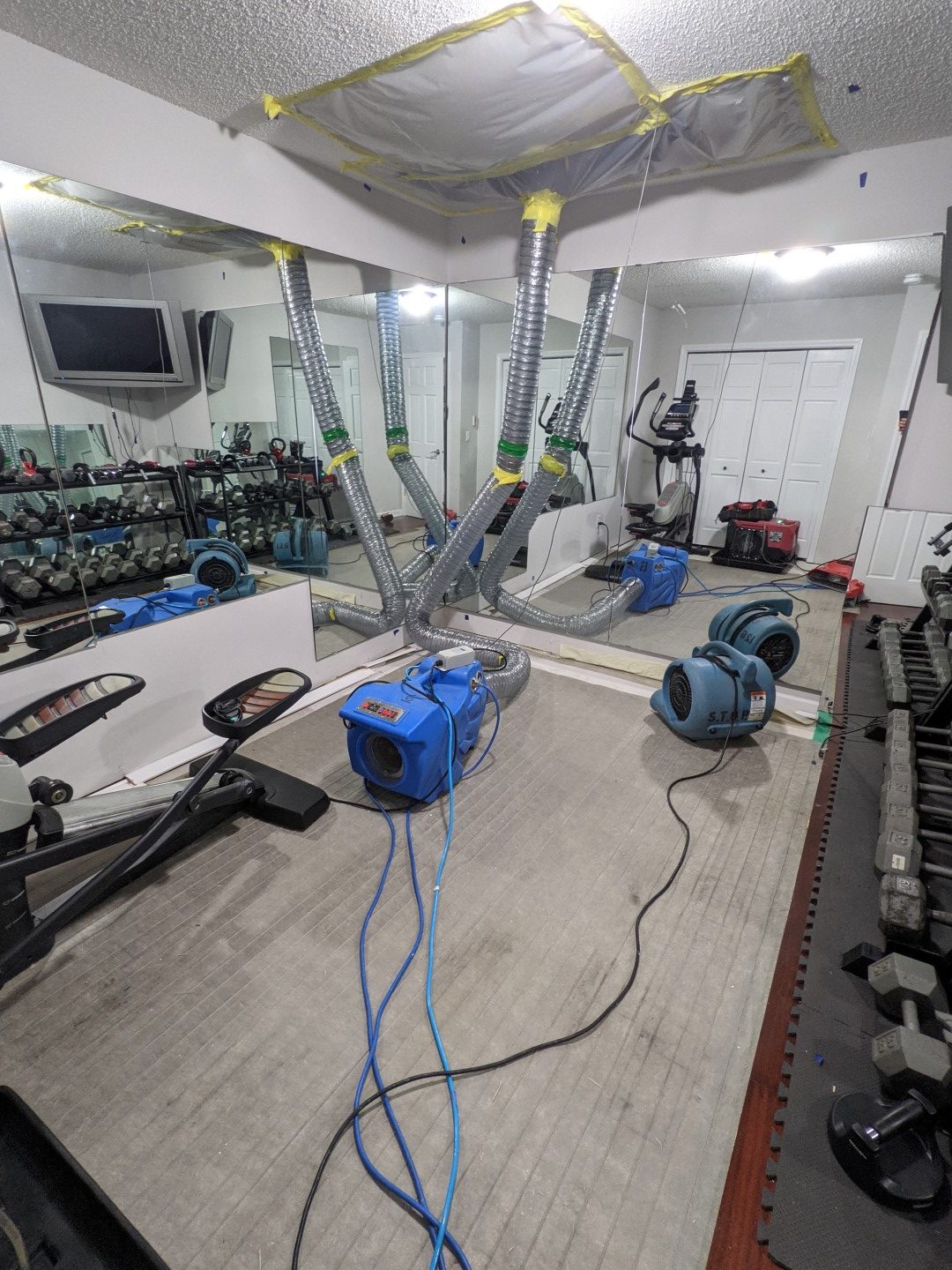
Thanks for asking! My last water episode happened in 2021, when my under-sink water heater sprang a leak after just a couple of years. It ruined the room below, and it took a disaster company almost six months to put everything back together. You can find the whole story here: My kitchen disaster.
Shortly after that, I installed a leak-prevention system called Guardian, made by Elexa Consumer Products. It was easy to install, and it saved my butt when my next water heater leaked again after less than three years. I bought it at Lowe’s for $300, and I consider the system paid for… which makes this next part a little easier to stomach.
My Guardian system no longer works. After switching my wifi network name, I couldn’t get the Guardian to connect to my phone again. I literally spent hours messing with it, I tried the online help, sent emails, made phone calls… nothing. I got absolutely no responses from the company, so I’ve ditched the system. But I’m not willing to go without a water leak detection system in my home, so I recently purchased and installed another system. The new one is called the YoLink DIY Automatic Water Leak Detection & Shut-Off Starter Kit. I found it on Amazon for $359.99.
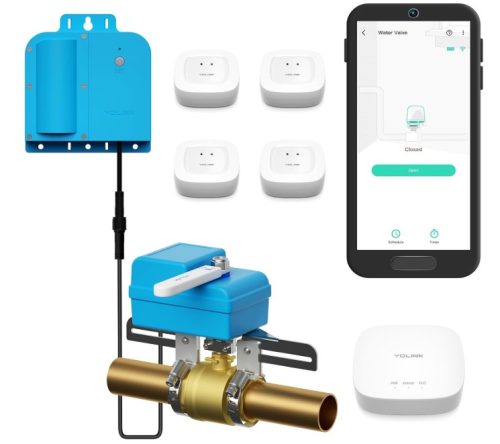
The YoLink system
This system consists of a water valve controller that mounts onto your main water valve, a battery-powered hub, and four remote sensors that’ll turn off water to your home if a leak is detected. There are other systems out there that monitor water flow and will turn off water to your home if excessive flow is detected, but I’m not interested in those systems. Some of the more common leak locations are at dishwashers, ice makers on refrigerators, and washing machines. I want a system that’ll shut off water even from tiny leaks, and this is just the product.
It took me approximately seven minutes to remove my old Guardian device and install the new YoLink valve controller. And then it probably took me about an hour to mess around with my phone and get all of the remote sensors activated and strategically placed around my home. I put them at the under-sink water heater, the dishwasher, behind the fridge, and next to my washing machine. And now I sleep better.
If you don’t have a leak-prevention system installed at your own home, I recommend investing in one. Installation is quick and easy, and this system could save you a lot of time and money if it performs just once.
Michelle
December 9, 2025, 11:25 am
There are less expensive ‘peace of mind’ water leak sensors; I have two by TP-Link (their Tapo line, $20 each) that coordinates with my Tapo smart system.. They won’t shut the water off, but the alarm sound will trigger the smart system to alert me if I’m not at home, and the alarm is loud enough that anyone at home will easily hear it. I have two sensors, one under/behind the washing machine on the main floor, the other for the dehumidifier in the finished basement in case it overflows. Just do a search for “Smart Water Leak Sensor” and see if your smart-system have them.
We also have a battery-operated (non-smart) water leak sensor inside of our sump pit in case our sump pump fails; we’ve dealt with flooded basements several times in our family and those are no fun!
Reuben Saltzman
December 9, 2025, 1:26 pm
Great tip, thank you Michelle! I recently tried the Tapo energy monitors, and found them to work flawlessly.
Bryce Kibbey
December 12, 2025, 1:58 am
Those Yo Link sensors look like Govees.
Alex
December 14, 2025, 1:24 pm
I’m sorry to hear your Guardian system died. I’m sure you tried these generic troubleshooting tips, like (1) doing a hard reset if the system has a reset button and (2) ensuring your router is broadcasting a 2.4G network. It could be worth just trying it with a new router as a test – I have one you can borrow if you want to try that.
I’ve had the Phyn Plus system for 3+ years and I’ve been happy with it. It’s a bit more expensive (currently on sale for $480) and installs inline with the water supply rather than operating on top of an existing pipe + shutoff valve.
Why pay more and hassle with the install? It’s really nice that it can alert you to potential leaks by just analyzing flow + water pressure (and shut off water to the house, like the other systems). Now I have some peace of mind for every place where water could leak out of the system, not just where leak sensors have been placed. There’s a nightly overnight check where water is cut to the whole house for ~7 minutes and it alerts you if there’s a significant drop in water pressure. That would’ve detected both of your point-of-use water heater leaks without a leak sensor.
The biggest risk with Phyn is that they shut down their cloud service or app and then most of the value of the device goes away.
Reuben Saltzman
December 15, 2025, 5:31 pm
Great tips, thank you, Alex. Unfortunately, I tried all of that :-/.