
The most common issues we find with overhead powerlines during home inspections are trees rubbing up against them and exposed connectors that present an immediate shock or electrocution hazard. When we find either one of these conditions, we recommend repair. The question that always follows is “Who’s responsible for that?”
Tree Branches
According to Xcel Energy, tree branches in contact with the overhead powerlines between the pole and house are the responsibility of the homeowner. Of course, this is only fair. Tree maintenance should be the responsibility of the homeowner, not the power company. Before trimming trees around overhead powerlines, you should contact the power company to have your service temporarily disconnected.
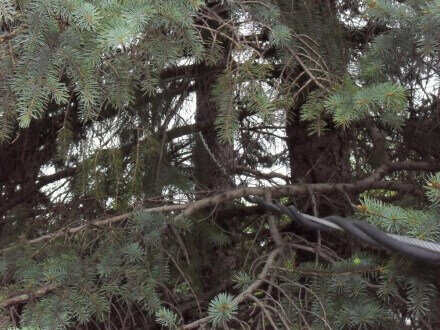
Trees Rubbing on Wires
The one exception is if a tree branch falls onto one of the overhead powerlines. If this happens, it’s considered an immediate safety hazard. Xcel Energy will take care of this issue at no charge to the owner.
Exposed connectors
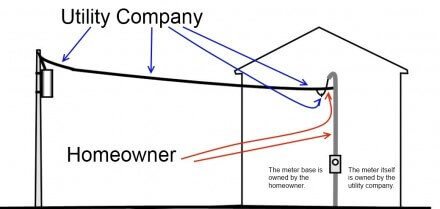
The power company owns the overhead conductors and the clamps that connect them. The diagram below shows the parts that are owned by the utility company and the parts that are owned by the homeowner.
And this annotated image below, courtesy of Xcel Energy, shows the same thing:
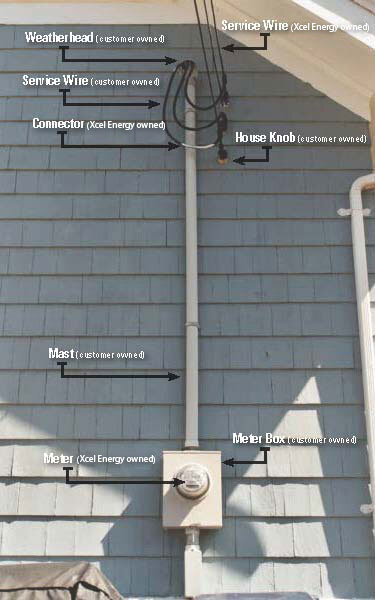
If there is frayed or damaged insulation on the conductors owned by the power company, they’ll fix it at no cost to the owner. Also, if there are exposed connectors, Xcel Energy will correct this at no cost.
The photos below all came from houses that we’ve inspected where there were exposed connectors, which connect the utility lines to the house.
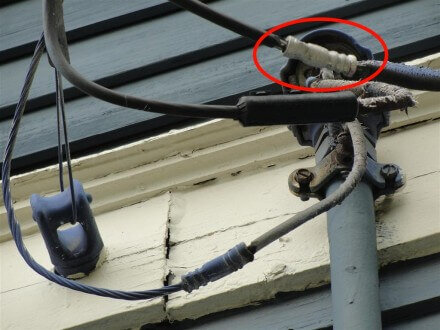
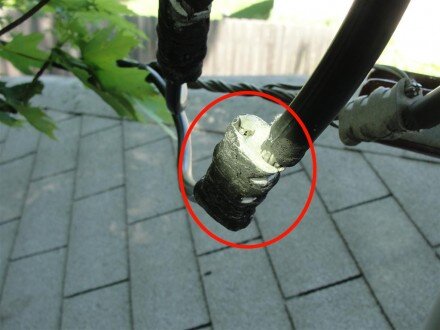
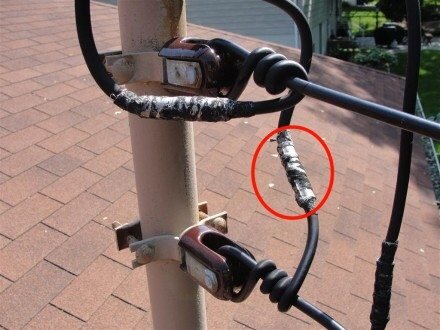
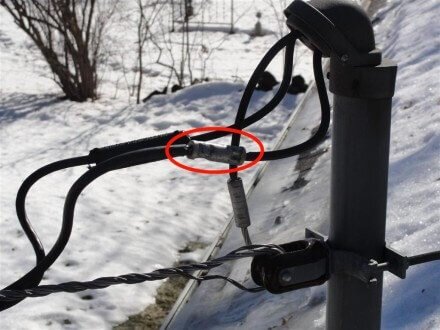
These are all immediate safety hazards that should be repaired by the utility company. While you may be thinking to yourself “but those are too high to even reach”… just imagine waving around an aluminum roof rake after a heavy snowfall. Scary, huh?
The good news is that all it takes to get these corrected is a call to the utility company. To help make sure that the utility company understands the problem, it’s helpful to tell them that your home inspector has identified exposed, uninsulated connectors at the overhead power lines.
If Xcel Energy tells you that this isn’t their responsibility and that you have to hire your own electrician to fix this condition, don’t buy it. Simply thank the person you’re talking to for their time and call back again. You’ll get someone else, and they’ll probably be more helpful. If they’re not, call back a third time if you have to. I’ve had countless clients go through this Xcel Energy over the past couple of decades, and this is the way it has always been.
Note: the proper name for the overhead power lines that come into the home is “service drop”. I say overhead power lines because this is what everyone else calls them, and my goal is to be understood.
Enjoyed this post?
Get new posts by email. No spam, unsubscribe anytime.