
Before you fire up your wood-burning fireplace this year, make sure it’s safe. I don’t mean to be a wet rag; I love wood fires in living rooms, but they’ve got a pretty bad track record.
Here are a few stats from the Consumer Product Safety Commission (CPSC) on residential fire losses from 2020 – 2022, from fireplace and chimney-related fires. These are estimates over a 3-year period:
- 15,400 residential fires per year
- Averaged over $130 million in property damage per year
- 30 deaths per year
- 90 injuries per year
Hopefully, this grabbed your attention. If you’re going to have a controlled fire inside your home, you shouldn’t take any risks. If you haven’t already, get your fireplace and chimney professionally inspected. We’ve been pushing this with our home inspections for the last decade. It’s easiest to do this inspection when you’re buying a home and thinking about inspections; that’s the best time. The next-best time is today.
What’s included with a chimney inspection
We call it a chimney inspection, but it’s really a chimney and fireplace inspection. We’re checking all the stuff related to having a fire in your house to ensure it’s safe. This includes an inspection of:
- The chimney exterior, including the crown, cap, flashing, and masonry.
- The fireplace itself, including the firebox, damper, smoke chamber, and hearth.
- The inside of the flue, top to bottom, with a video camera. This is the big one. Cracked flue tiles, gaps, and missing mortar joints are almost impossible to see from the firebox or the top of the chimney.
- Creosote buildup in the flue. Creosote is the stuff that fuels chimney fires. The more you use your fireplace, the more creosote you’ll have.
- The parts of the chimney you can get to in the attic, basement, and crawlspace.
- Clearances to combustibles, like wood framing and insulation, wherever we can see them.
- Whether the flue is the right size and type for the fireplace or appliance it serves.
This is what the National Fire Protection Association (NFPA) calls a Level 2 inspection. A Level 2 inspection is recommended:
- When you buy or sell a home.
- When you make changes to the system, like switching fuel types, relining the flue, or installing a new insert or stove.
- After a chimney fire, a big storm, or anything else that could have damaged the chimney.
The most common defects
Without a doubt, the most common issue we find during chimney inspections is missing mortar at the joints of clay flue liners.
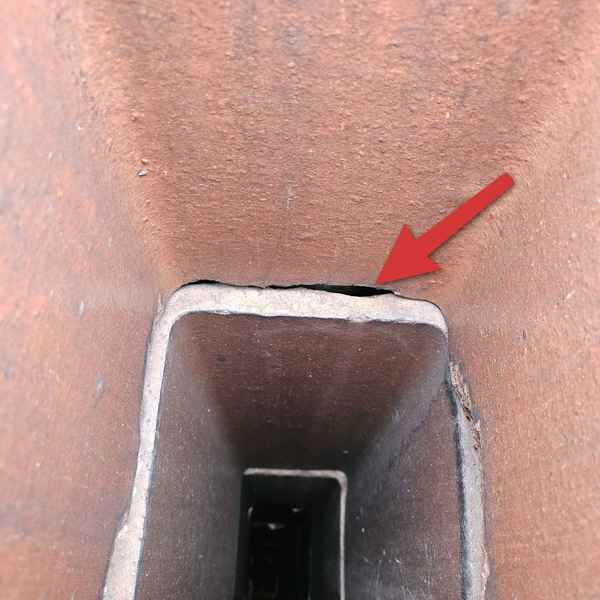
When this happens, heat and flames can get through the gaps to the surrounding masonry and nearby wood framing, which can start a house fire. The fix for this is typically to have the chimney re-lined.
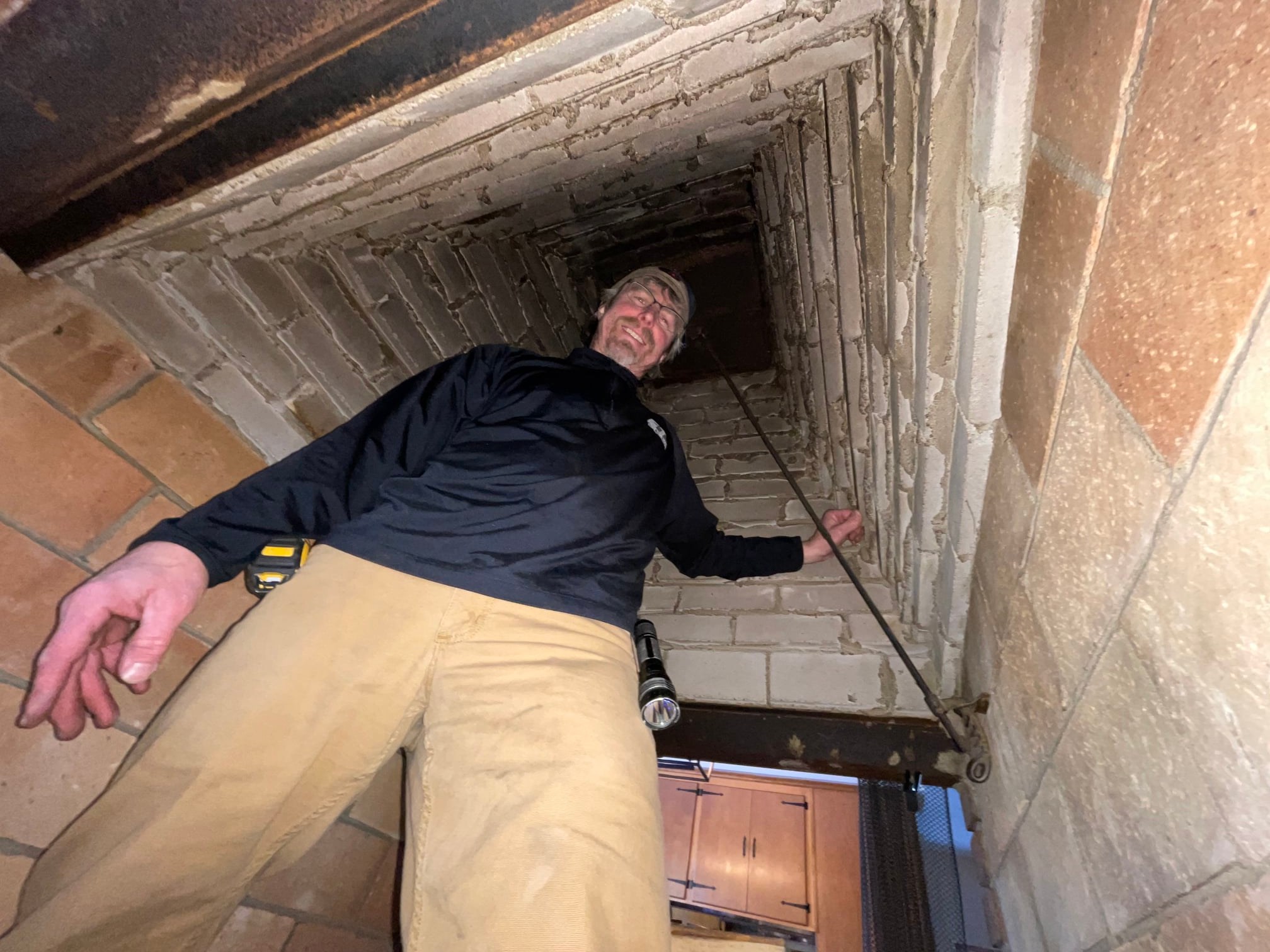
Another very common issue is missing parging at the smoke chamber.
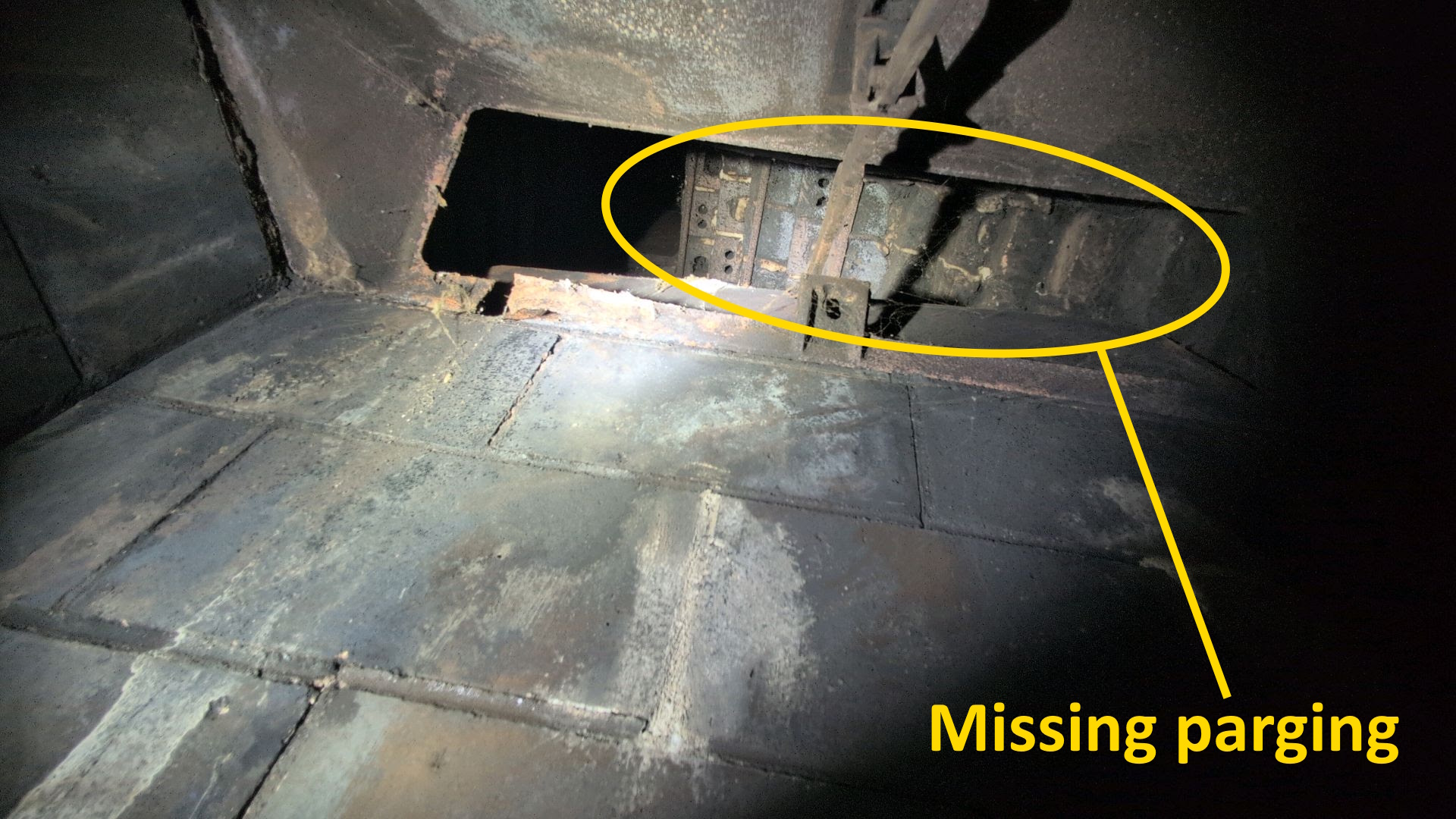
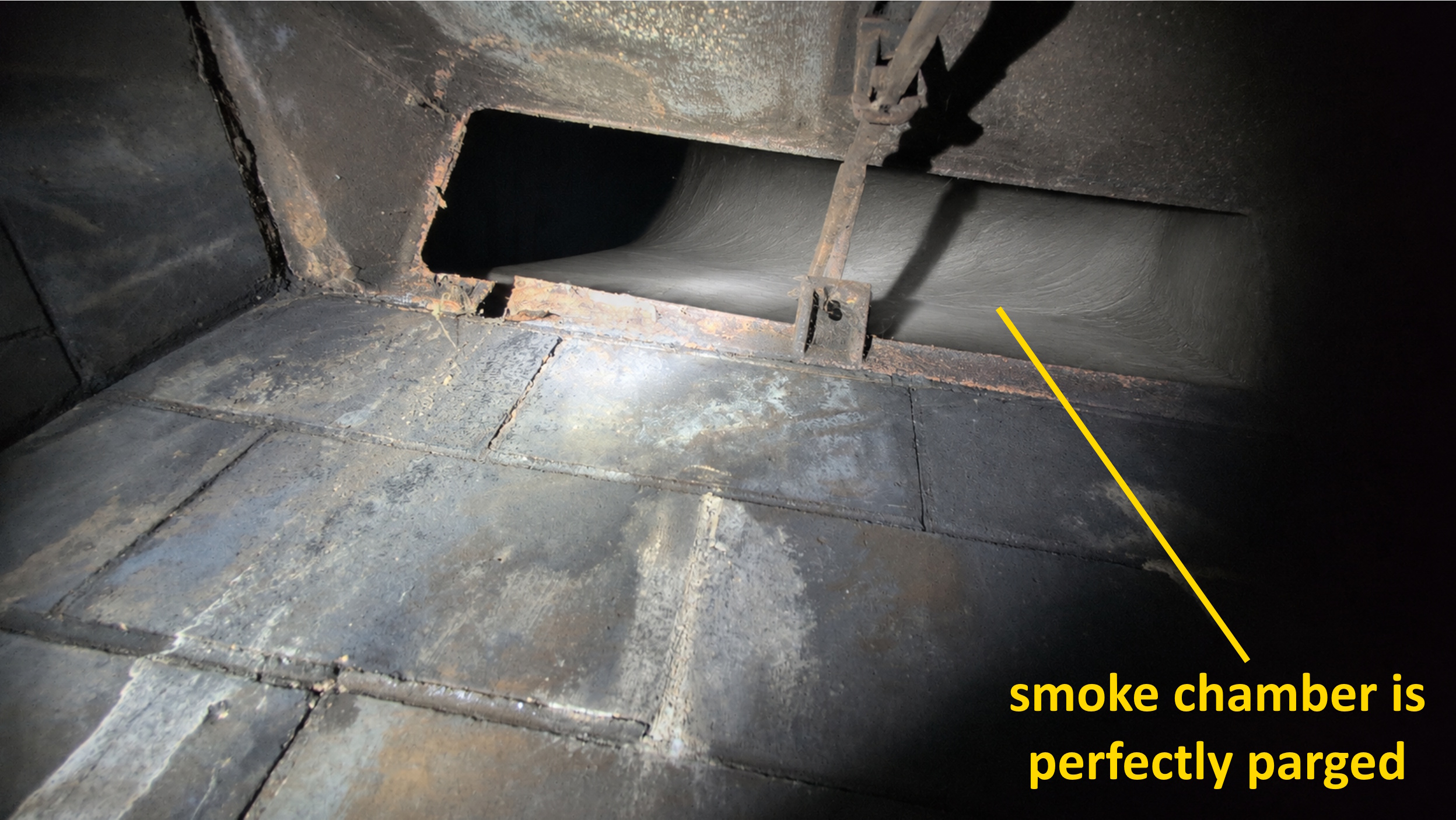
When you look up inside a fireplace, the area that transitions between the firebox and the chimney is called the smoke chamber. You should NOT be able to see individual bricks and mortar joints in this area; it should be one smooth surface when it’s properly installed. Like this:
Summary
If you’re not sure about the safety of your fireplace, don’t use it. The risks are way too high to leave this to chance. Hire a CSIA Certified Chimney Sweep to perform a Level 2 inspection. We charge $225 for these inspections, and we don’t perform any repairs or cleaning services, so you get a 100% unbiased opinion when you hire us. To schedule, give us a call, send us a text, or email us. We’d love to help.
No responses to “Is your fireplace ready for winter?”
No comments yet.
RSS feed for comments on this post. TrackBack URL
Leave a Reply