
An improperly installed dishwasher drain hose is the most common defect we find with dishwasher installations, but it’s also one of the easiest things to get right.
Quick answer: A dishwasher drain hose must connect to the sink drain before the P-trap, never after it. It also needs a high loop fastened as high as possible under the counter, or an air gap. The high loop keeps dirty water from flowing back into the dishwasher and keeps the hose from holding water and odors.
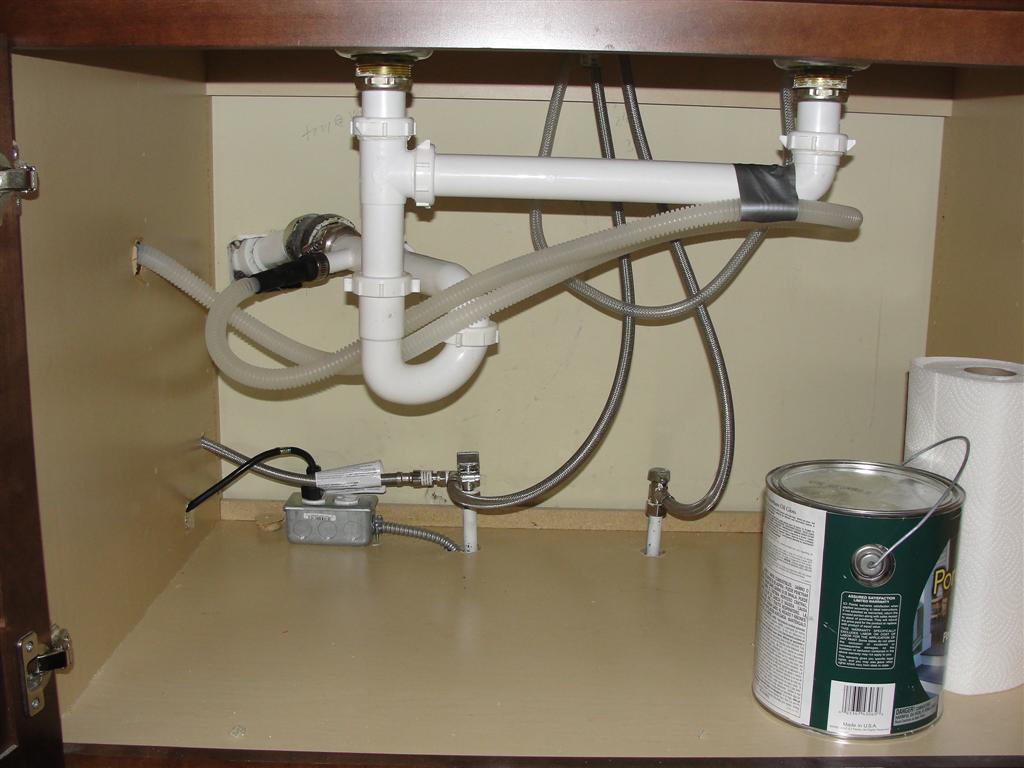
In the photo below, which was featured as a Structure Tech Photo of the Day on our Facebook page, there are several plumbing defects shown. Two of these are related to the dishwasher drain.
Can you spot them?
Where should a dishwasher drain hose connect?
A dishwasher drain hose should connect to the sink drain on the house side of the P-trap, before the trap. The water that sits in the trap blocks sewer gas. If the hose connects after the trap, on the sewer side, sewer gas can travel back up into the dishwasher.
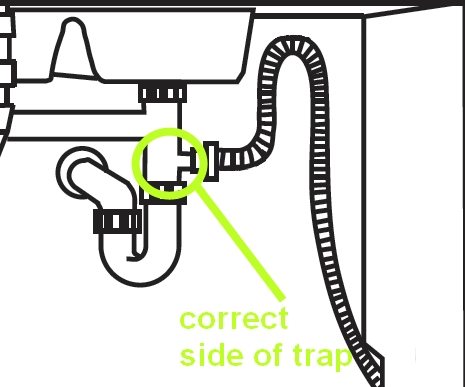
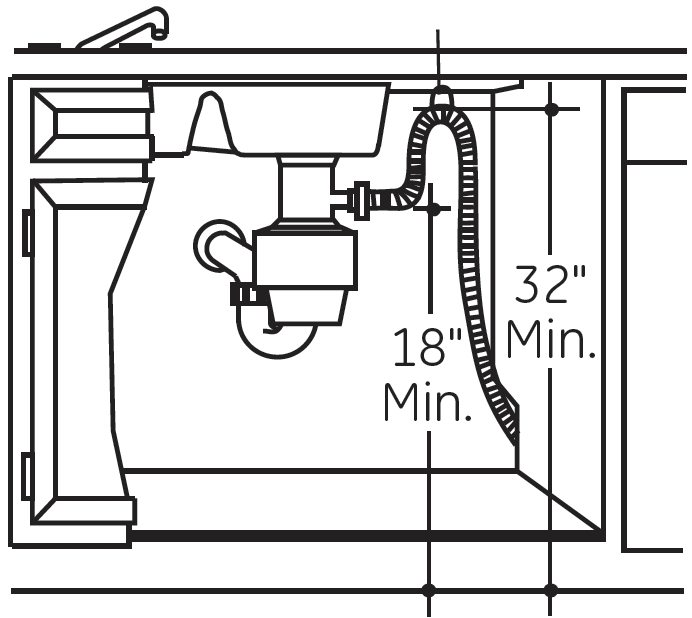
The first problem is the dishwasher drain is connected to the sewer side of the trap. Water always sits in the bottom of the P-trap, and this prevents sewer gases from coming into the house. The dishwasher drain must be connected before the P-trap, not after it, which is what was done here. With this improper installation, sewer gases have the potential to come back into the dishwasher. The diagram below right shows a proper installation.
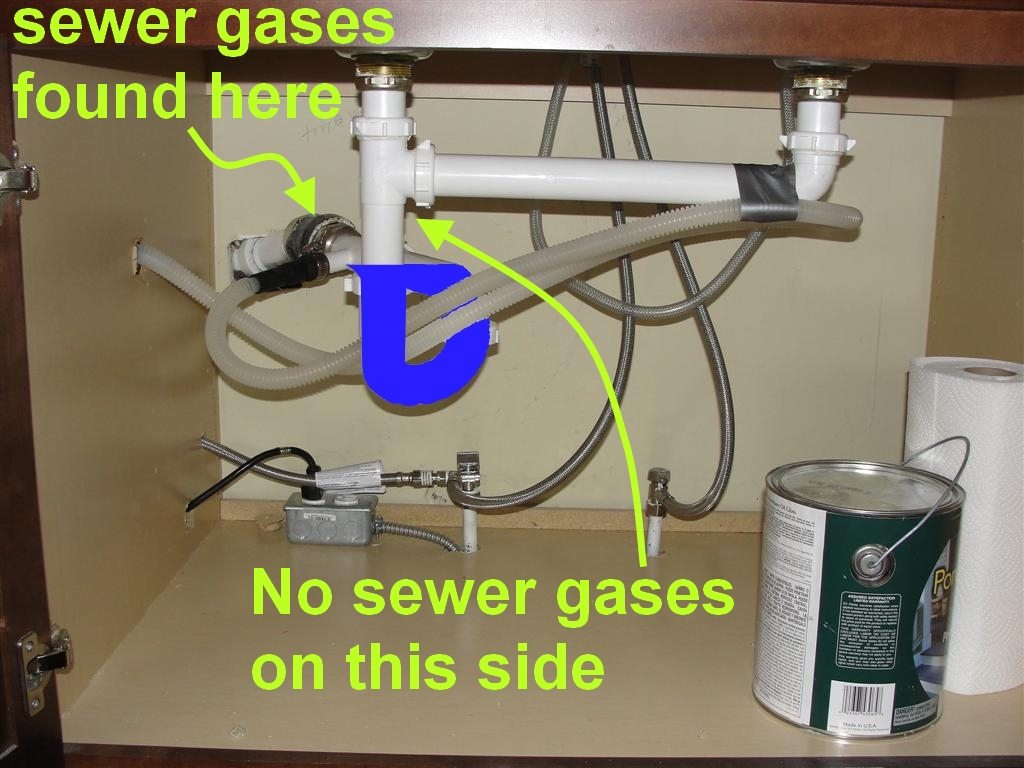
The diagram below right shows a proper installation.
Does a dishwasher drain hose need a high loop?
Yes. Every dishwasher manufacturer’s installation instructions require a high loop under the sink, and so does section P2717.2 of the International Residential Code. Fasten the drain hose as high as possible under the countertop. The loop built into the side of a new dishwasher does not replace it.
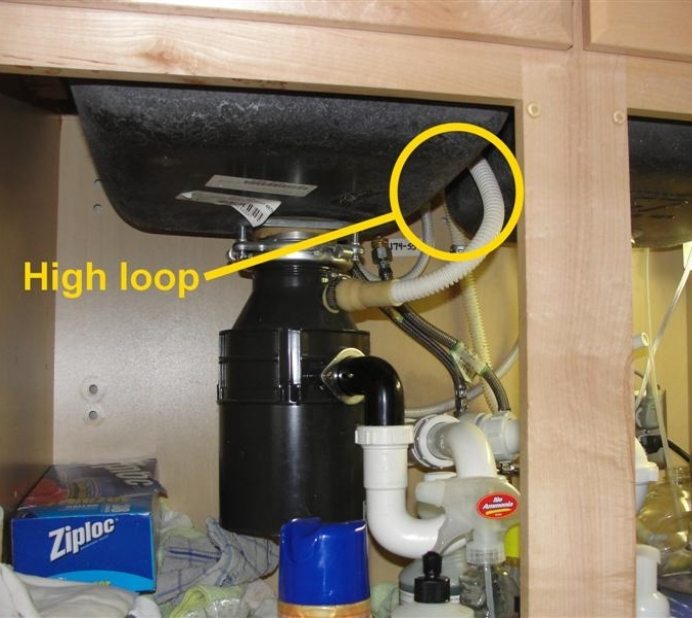
In the diagram above, you’ll notice that the dishwasher drain makes a high loop underneath the kitchen sink. This is the minimum requirement for every dishwasher drain installation; it’s required by every dishwasher manufacturer, as well as section P2717.2 of the International Residential Code. However, that’s not what we require here in Minnesota. Hang on, I’ll come back to that in a minute. But first, here’s a photo showing what a high loop looks like.
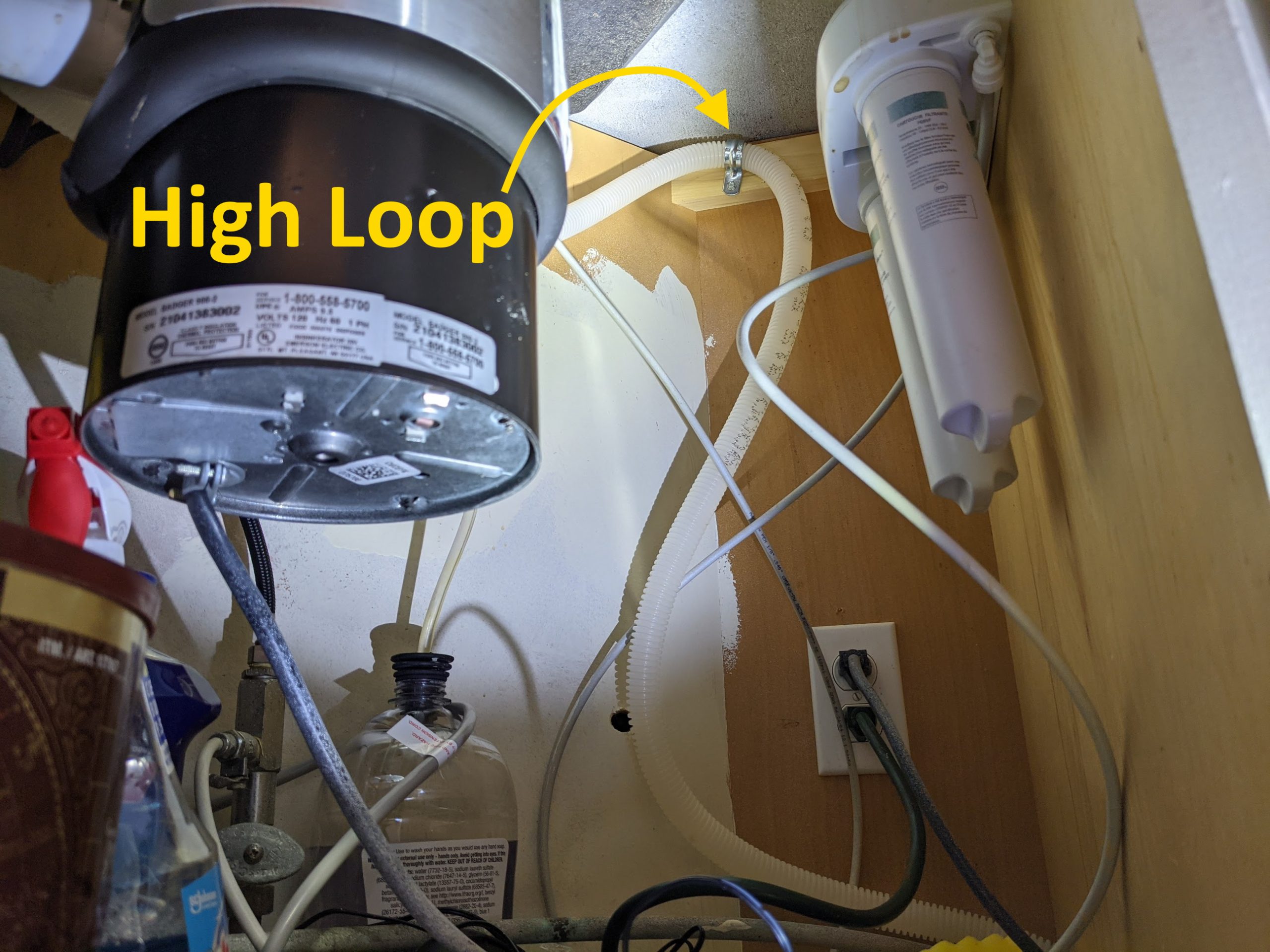
As you can see, the dishwasher drain hose is fastened as high as possible underneath the counter. And here’s a diagram from the dishwasher manufacturer showing the same thing.
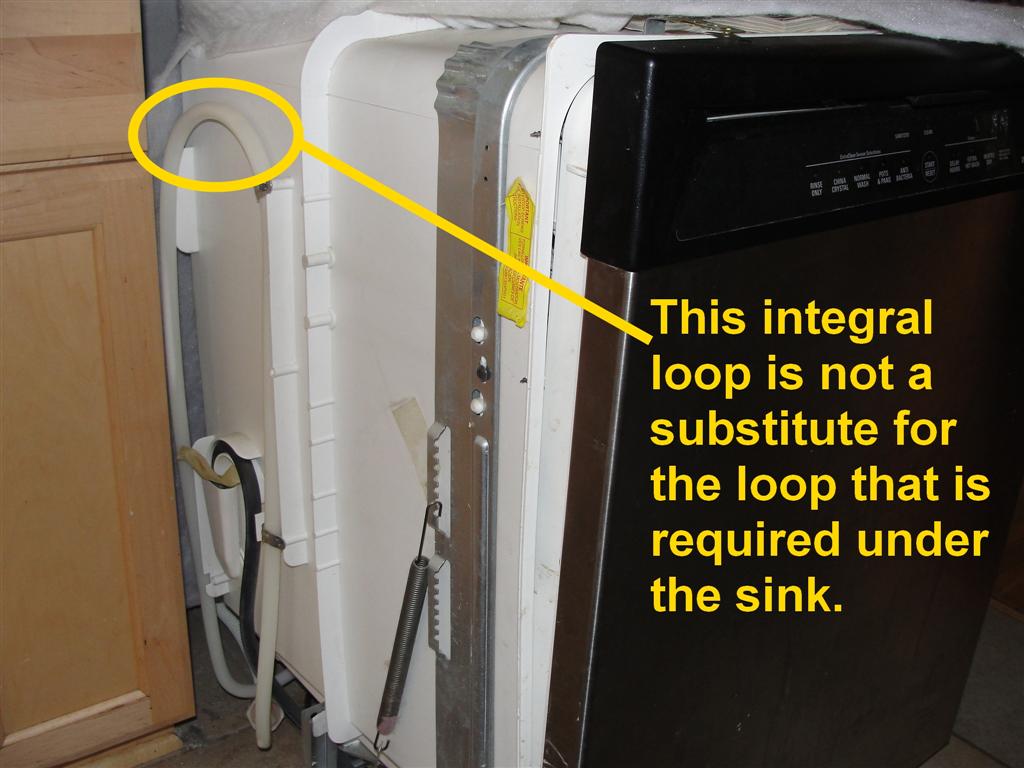
Although new dishwashers come from the manufacturer with the drain looped up at the side of the dishwasher, every installation manual still requires this high loop underneath the sink.
Why do manufacturers require a high loop?
Manufacturers gave us two reasons. The high loop prevents dirty water from backflowing into the dishwasher, and it lets the hose drain fully so standing water doesn’t cause odors or poor drainage. Kenmore, GE, Bosch and Viking answered our question; Maytag, Whirlpool and Amana did not.
I’ve heard different reasons for why an additional loop is required under the sink, so I decided to contact the manufacturers directly.
I sent out an email to eight dishwasher manufacturers about a decade ago asking them this question:
“A high loop is required on the dishwasher drain in the installation instructions for all of your dishwashers. What is the purpose of this? Doesn’t the high loop that is incorporated into the side of the dishwasher achieve the same thing? Any insight or commentary into this matter would be greatly appreciated.”
Here are the responses I received:
- Kenmore: “The high loop or air gap must be used to prevent potential backflow contamination of the dishwasher. Local plumbing codes generally dictate the requirements in your area. Section 807.4 of the Uniform Plumbing Code states: “No domestic dishwashing machine shall be directly connected to a drainage system or food waste disposer without the use of an approved dishwasher airgap fitting on the discharge side of the dishwashing machine. Listed airgaps shall be installed with the flood level (FL) marking at or above the flood level of the sink or drainboard, whichever is higher, or separately trapped with the airbreak located on the stand pipe.”
- GE: “If an air gap is not required, the drain hose must have the high loop from the floor to prevent backflow of water into the dishwasher or water siphoning out during operation.”
- Bosch: The high loop in the drain hose of your dishwasher is to keep water from settling in the hose if it were hanging down any lower or horizontally. This keeps the drain hose dried out and keeps any odors from backing up into the dishwasher.
- Viking: In testing our dishwashers, we have found that the additional high loop in the back of the dishwasher is required for proper draining of the water. We have seen when this piece is not applied that over time the consumer will have issues with the water back up and causing issues with proper drainage and water pooling in a particular area.
- Maytag: No response.
- Whirlpool: No response.
- Amana: No response.
To summarize, the reasons for the high loop are to prevent potential backflow of water into the dishwasher and to prevent improper drainage of water. Even though dishwashers come from the factory with the drain looped up high against the side of the dishwasher, this is not an acceptable substitute for the high loop underneath the kitchen sink. In Minneapolis, the lack of a properly installed high loop under the kitchen sink requires repair for their Truth-In-Sale of Housing evaluations.
How do you fix a missing high loop?
Fixing a missing high loop takes about 10 seconds and three items: a screwdriver, a screw and a 3/4″ EMT clamp from the electrical department of any home improvement store. Clamp the drain hose to the underside of the countertop, as high as it will go. The video at the top of this post shows how.

Is a dishwasher air gap required in Minnesota?
Not for homes anymore. Minnesota required a dishwasher air gap, the fitting mounted on top of the sink, from the beginning of 2016 until December 17, 2021. That’s when an updated plumbing code dropped the requirement for residential installations. A high loop under the sink is now acceptable.
Instead of a high loop underneath the kitchen sink, dishwasher manufacturers also allow an air gap. This consists of an ugly device mounted on top of the kitchen sink, and it looks like this:
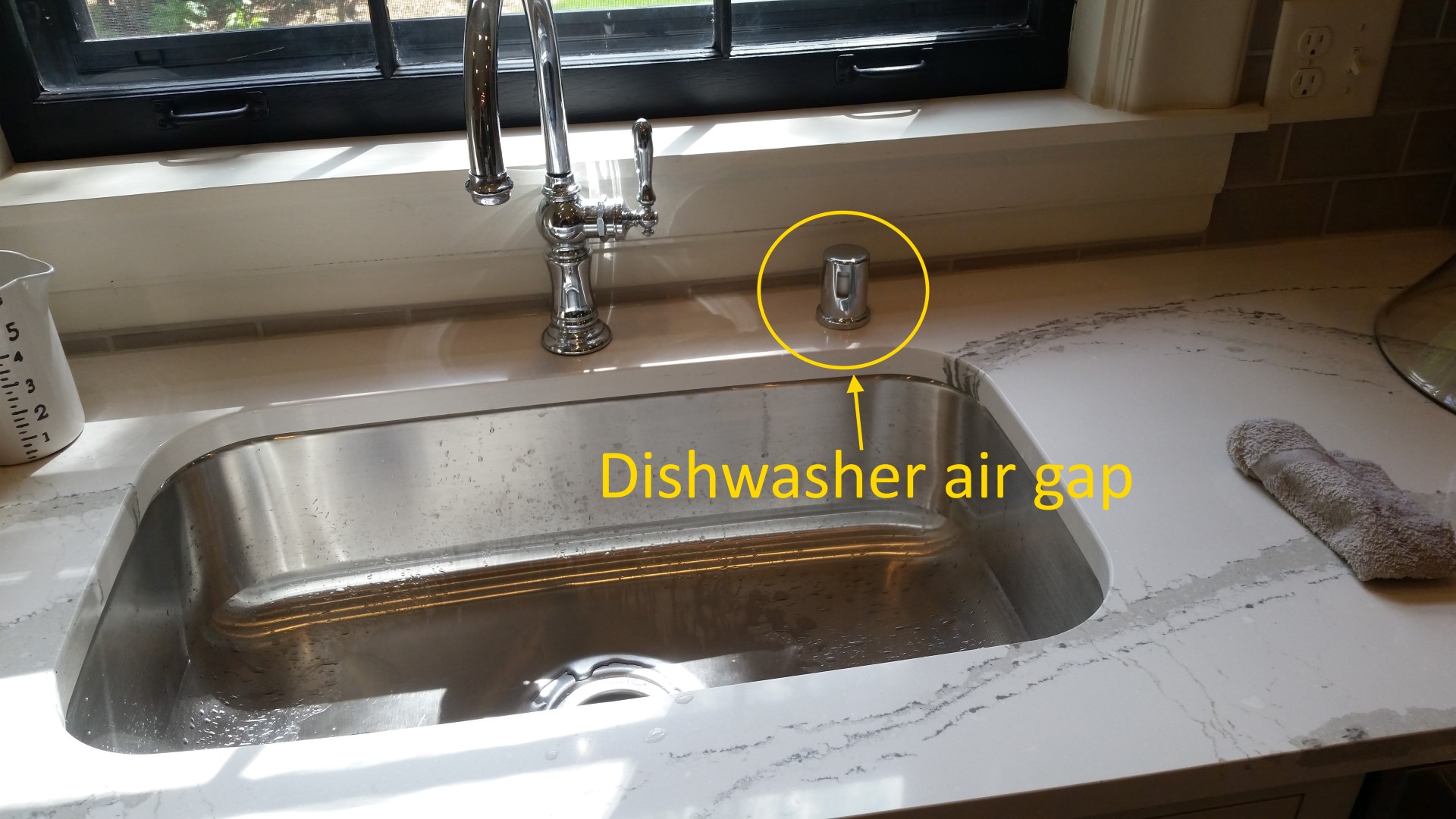
These have been required in Minnesota since the beginning of 2016, and nobody likes them. I blogged about dishwasher air gaps back in 2017, and I’m going to quote what I said back then. Dishwasher air gaps are definitely not something that we recommend installing during our home inspections. While dishwasher air gaps are technically required on new installations by code, we’re not code-compliance inspectors. As home inspectors, we get to make recommendations on stuff that makes sense to us. These don’t.
The great news is that air gaps went away for Minnesota homes in 2021. Our old plumbing code required an air gap through sections 414.3 and 807.4 of our plumbing code. Thankfully, the updated plumbing code adopted on 12/17/21 changed that. Section 414.3 now tells you to follow section 807.3, which says the following:

I underlined the important part that’s changing. Yay. Homeowners, plumbers, builders, designers, building officials, and everyone else should be happy about this change. Well, everyone except for air gap manufacturers. Sorry guys, but you had your day.
Dishwasher drain FAQ
Can a bad dishwasher drain installation cause odors?
Yes. Without a high loop, water can settle in a drain hose that hangs low or runs horizontally. Bosch told us this can let odors back up into the dishwasher. A hose connected after the P-trap can also let sewer gas into the dishwasher.
Can a missing high loop cause drainage problems?
It can. Viking told us its testing found the extra high loop is needed for proper draining. Without it, water can back up and pool over time.
Is the factory loop on the side of the dishwasher enough?
No. New dishwashers come with the drain hose looped up the side of the unit, but every installation manual still requires a second high loop under the kitchen sink.
Does a missing high loop need repair for a Minneapolis Truth-in-Sale of Housing evaluation?
Yes. In Minneapolis, a missing high loop under the kitchen sink is a required repair on a Truth-in-Sale of Housing evaluation.
Dale Kopp
October 1, 2021, 6:20 pm
What about a dishwasher that drains into a garbage disposal?