
While home inspection standards of practice don’t require it, here at Structure Tech, we report the age of major appliances. This includes water heaters, furnaces, air conditioners, and boilers. Once you know where to look, this information is usually easy to find. Today, I’ll share our tips and tricks for determining appliance ages.
Age Decoder Sites
Building Intelligence Center is the default age-decoder site for appliance ages. I’m pretty sure this is the go-to website for every home inspector in North America, and it’s what we’ve used for a long time. You navigate the website to learn the date code methodology for the particular appliance you’re looking at, and it teaches you how to decode the age. But they’re not the only game in town anymore.
SwiftReporter has a new age decoder page where you enter the appliance info, and it does the work for you, instantly telling you the age. It not only gives the exact results you’re looking for, but also an estimated service life, along with a narrative home inspectors can copy and paste into their inspection reports.
You can also use AI search results. You simply upload a photo of the appliance data plate and ask your AI assistant how old the appliance is. But USE CAUTION! I tried my own furnace, manufactured in March of 2021. Here’s what I got:
- Gemini 3.6 Flash: March 2016 (wrong!)
- Gemini 3.1 Pro: March 2021 (correct)
- ChatGPT, Instant: June 2018 (wrong!)
- ChatGPT, High: March 2021 (correct)
- Claude Haiku 4.5: Suggested I look somewhere else
- Claude Opus 5, high effort: March 2021 (correct)
- Perplexity, Best: March 2018 (wrong!)
- Grok, Fast mode: March 2021 (correct)
If you’re going to use AI to figure this out, don’t rely on the fastest, cheapest settings.
Appliance Recovery can be used for kitchen and laundry appliance ages.
So those are the nuclear options. But most of the time, we can figure out appliance ages without all that. Read on.
Water Heaters
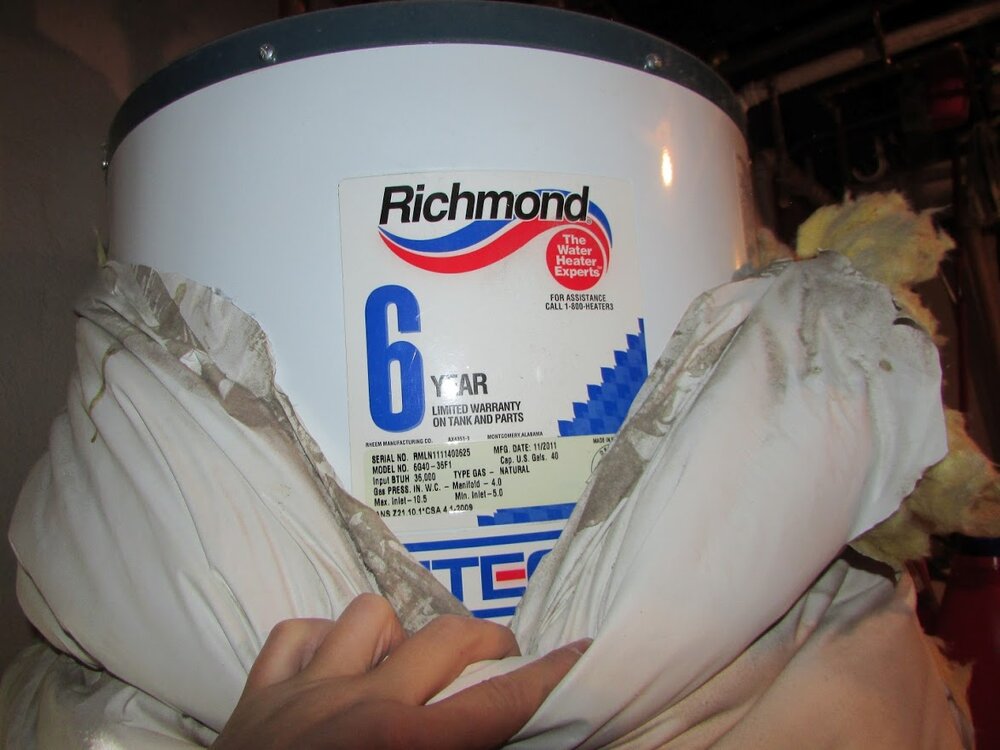
The data plate for water heaters is always right on the front. Many water heaters clearly indicate the date of manufacture, like the one below.
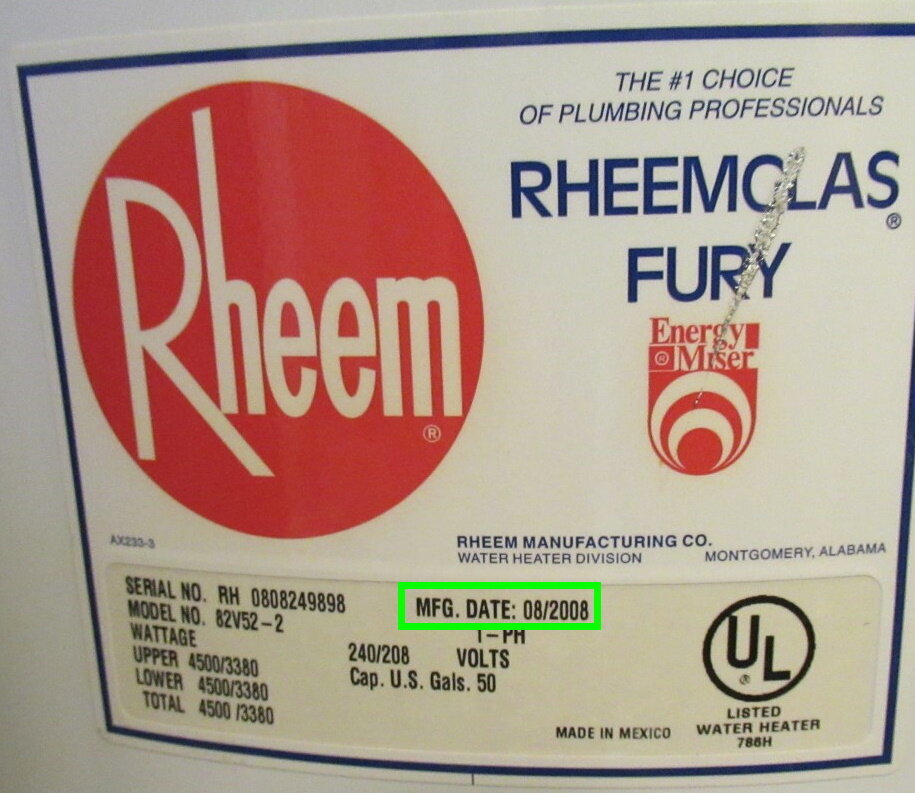
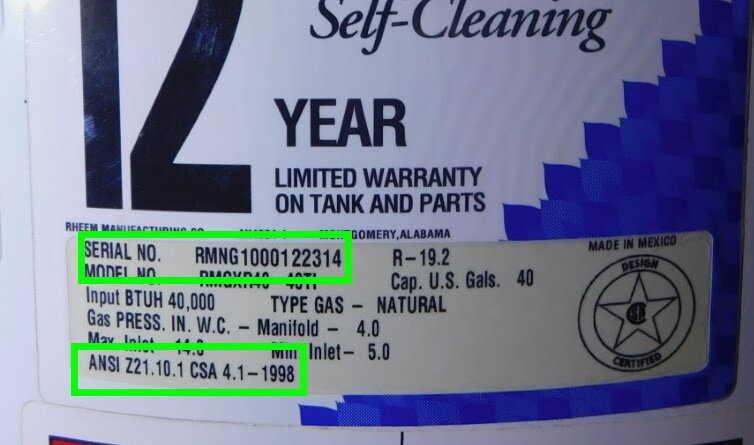
Even if the date of manufacture isn’t listed here, I can use the serial number as a good clue. It starts with 0808, which indicates 08/2008. For gas water heaters, there’s always an ANSI standard listed, and the year of that standard is typically 2 to 4 years older than the water heater itself. Look for some numbers in the serial number that would make logical sense. For example, the water heater below has an ANSI year of 1998, and the serial number has 1000 at the beginning, which means it was manufactured 10/2000.
Unfortunately, not all water heater manufacturers make it this easy. For example, Bradford White uses a letter code in their serial number to indicate the age.
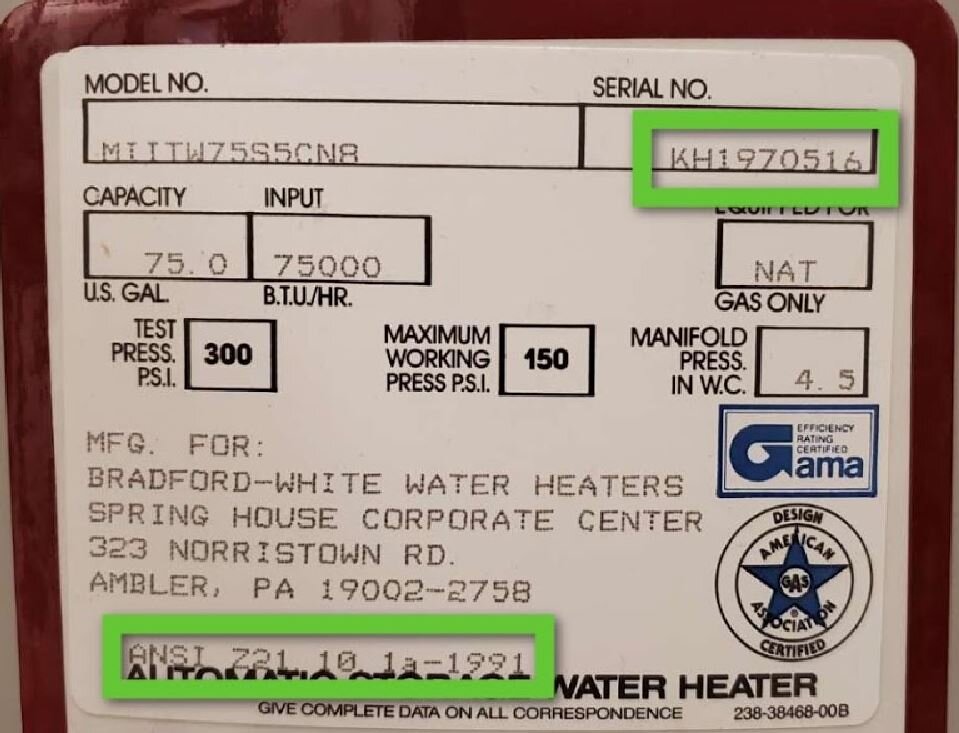
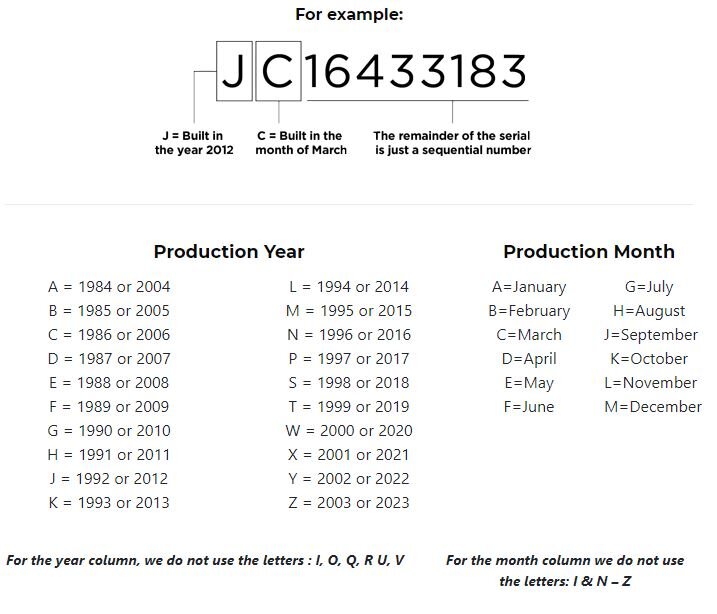
Based on the ANSI number, I’d estimate this water heater to be a 1994. But if I wanted to be sure, I’d head on over to Building Intelligence Center to use one of their secret decoder charts, which has this information:
Furnaces
To find the data plate on a furnace, you usually have to remove the front cover. Most just pop off, but sometimes you’ll need to remove a pair of screws to get it off. Once removed, take a look inside the furnace cabinet. There’s usually a label on the side or bottom of the upper compartment. Every once in a while, the manufacturer will be sneaky and put it on the panel you just removed. If you can’t find it, look harder. It’s always there.
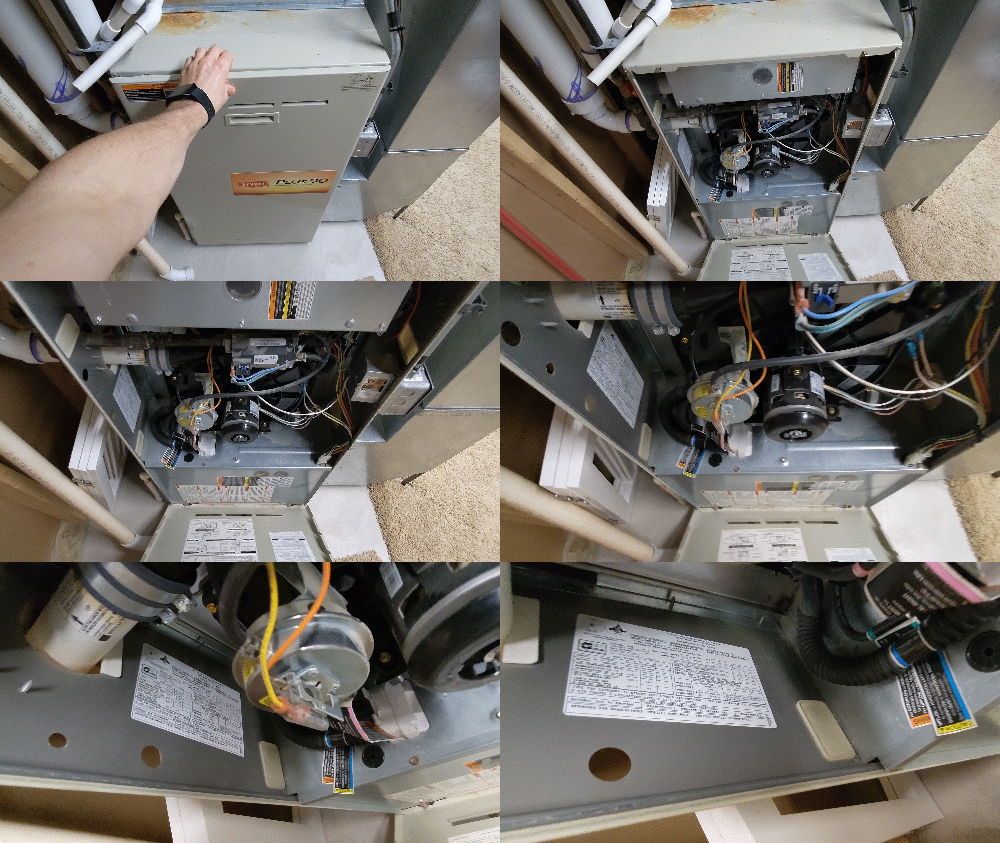
Once you’ve found it, follow the same advice I gave above for gas water heaters. Sometimes the age is clearly indicated; the ANSI standard gives you a clue; and sometimes the age is contained within the serial number. When all else fails, head to one of the sites listed at the beginning of this post.
Boilers
The data plate for boilers is usually found inside the unit, and you usually have to remove a cover, just like you do for furnaces. Look for an ANSI standard, and assume the boiler is about 2 to 9 years newer than the ANSI standard. Boilers are always the most challenging appliance to date accurately. Take, for example, Weil-McLain boilers. They put a separate label on their boilers with a “CP” number.
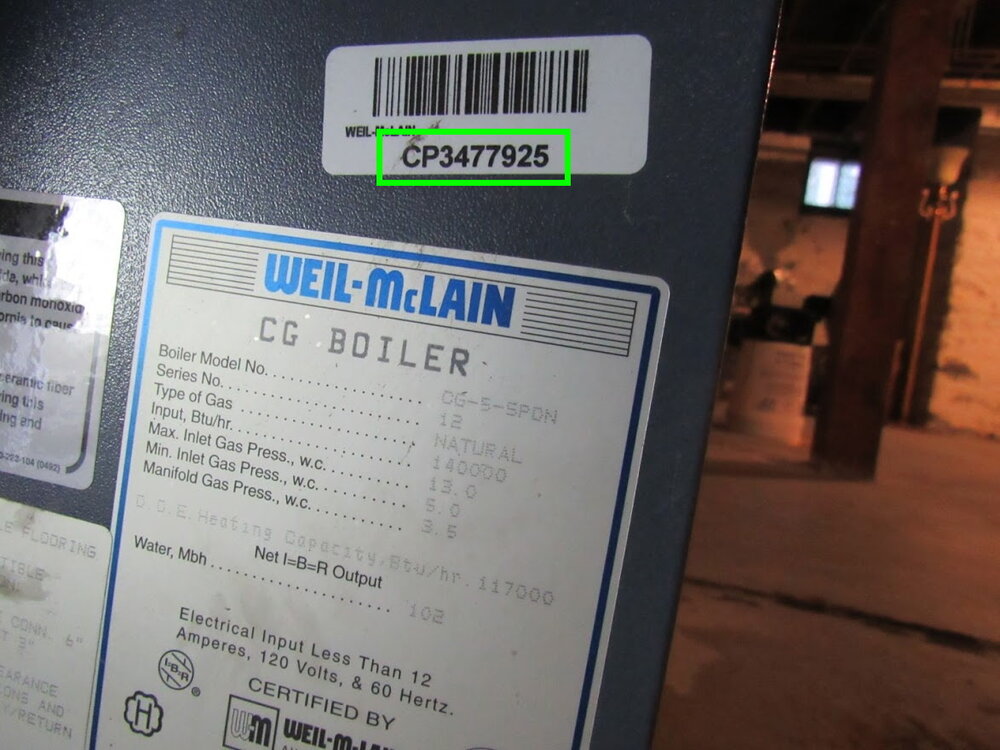
Once you have that, Building Intelligence Center gives a link to Weil-McLain’s lookup tool, where you enter the CP number on their website to find the age. But even when I used their website, they told me I was using an invalid number. Go figure!
For Slant/Fin boilers, you’re SOL. They no longer make boilers, and their tech support line is gone.
Air Conditioners
The data plates for air conditioners are usually on the back of the unit, close to where the refrigerant lines enter. If you can’t find it, keep looking. It’s there somewhere. Sometimes you have to lay down on the ground or crawl between the house and the unit, but it’s surely there. The sun and outdoor elements aren’t always nice to these labels, however.
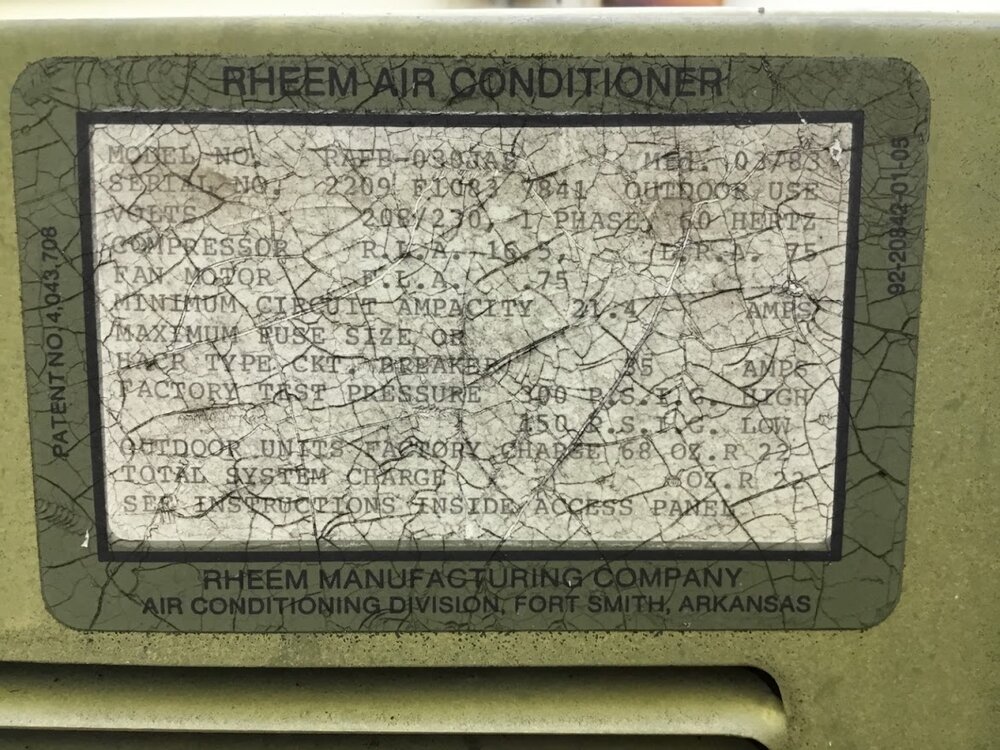
Once you’ve found the data plate, either look for a date of manufacture or the serial number, and again, head on over to one of the decoder websites.
No responses to “How to determine the age of appliances”
No comments yet.
RSS feed for comments on this post. TrackBack URL
Leave a Reply