
I recently had a friend ask me why his fireplace is stinky in the summer. If it smells like a dead carcass, you’re dealing with a dead carcass. You’re welcome.
But let’s assume it smells like soot. That’s the more common cause of a stinky fireplace.
Winter = no odors
During the winter, a fireplace chimney does its thing: it allows warm air to rise and escape. It’s the stack effect. This is why chimneys usually don’t stink during the winter.
Even so, we easily overcome this stack effect during our home inspections. We run everything that removes air from the house, such as the kitchen exhaust fan, bathroom exhaust fans, and the clothes dryer. When all of those things pull air out of the house, it needs to be replaced somehow. The chimney is just a big hole to the outside, so that’s where air comes from.
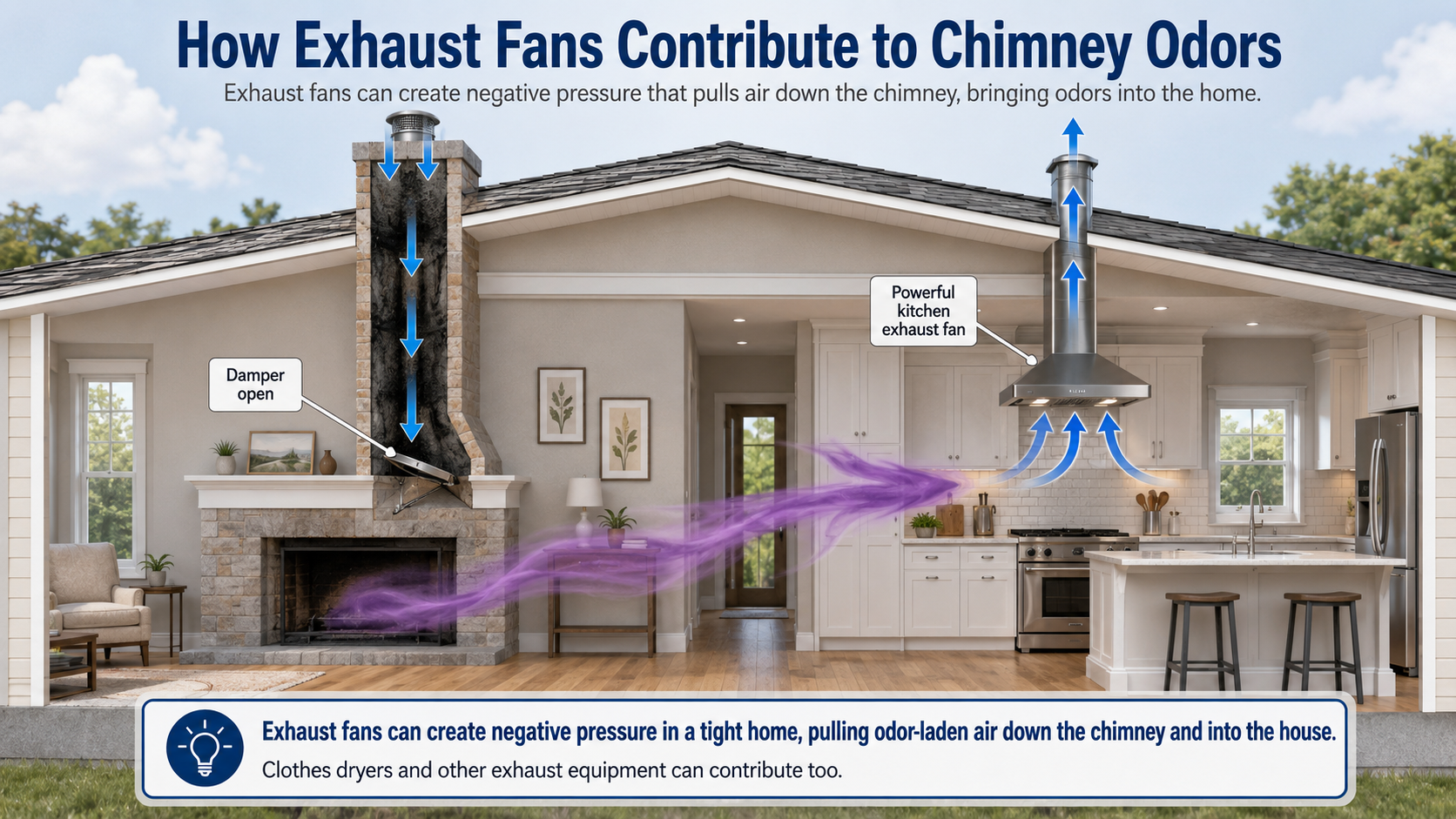
When we do this test, there’s typically a noticeable cold draft coming down the chimney, and typically a sooty smell. But the smell isn’t overwhelming in winter because it’s cold. We all know odors intensify with heat, and sometimes with humidity.
Summer = stinky
When a chimney is subjected to hot, humid air, it produces a stronger odor. I don’t have any scientific evidence to back this up, just thousands of first-hand experiences during home inspections. But much more important than the strength of the odor is the movement of the air in the chimney. When chimney air is pulled into the home, you smell it.
The stack effect doesn’t work consistently in the summer. If it’s 70° inside the home and 80° outside, the chimney won’t behave like a chimney. Outdoor air is cooled in the chimney and is happy to fall down and enter the home… assuming all else is equal. But they’re usually not.
Anytime you have one of the aforementioned fans pulling air out of the home, you’ll have more air coming down the chimney. This increases the stink effect.
How to fix a stinky chimney
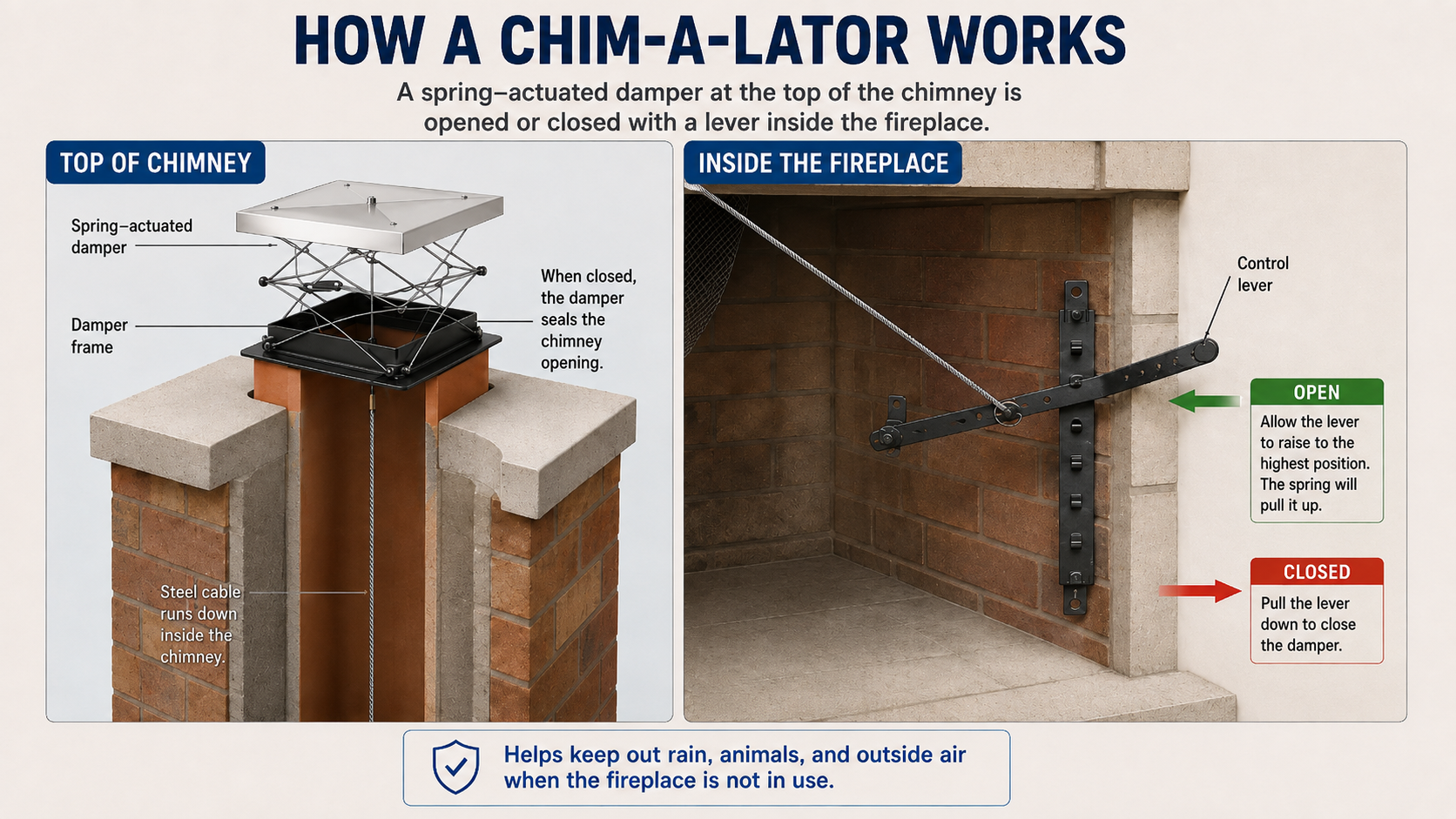
To fix a stinky chimney, start with the obvious stuff. Make sure you’ve closed the damper to the fireplace. The best kind is a CHIM-A-LATOR style; this consists of a metal lever inside the firebox which connects to a steel cable that closes a spring-actuated damper at the top. You know it’s closed when the lever handle in your fireplace is all the way down. These are very effective; if you have one of these and it’s closed, you probably won’t have a stinky fireplace.
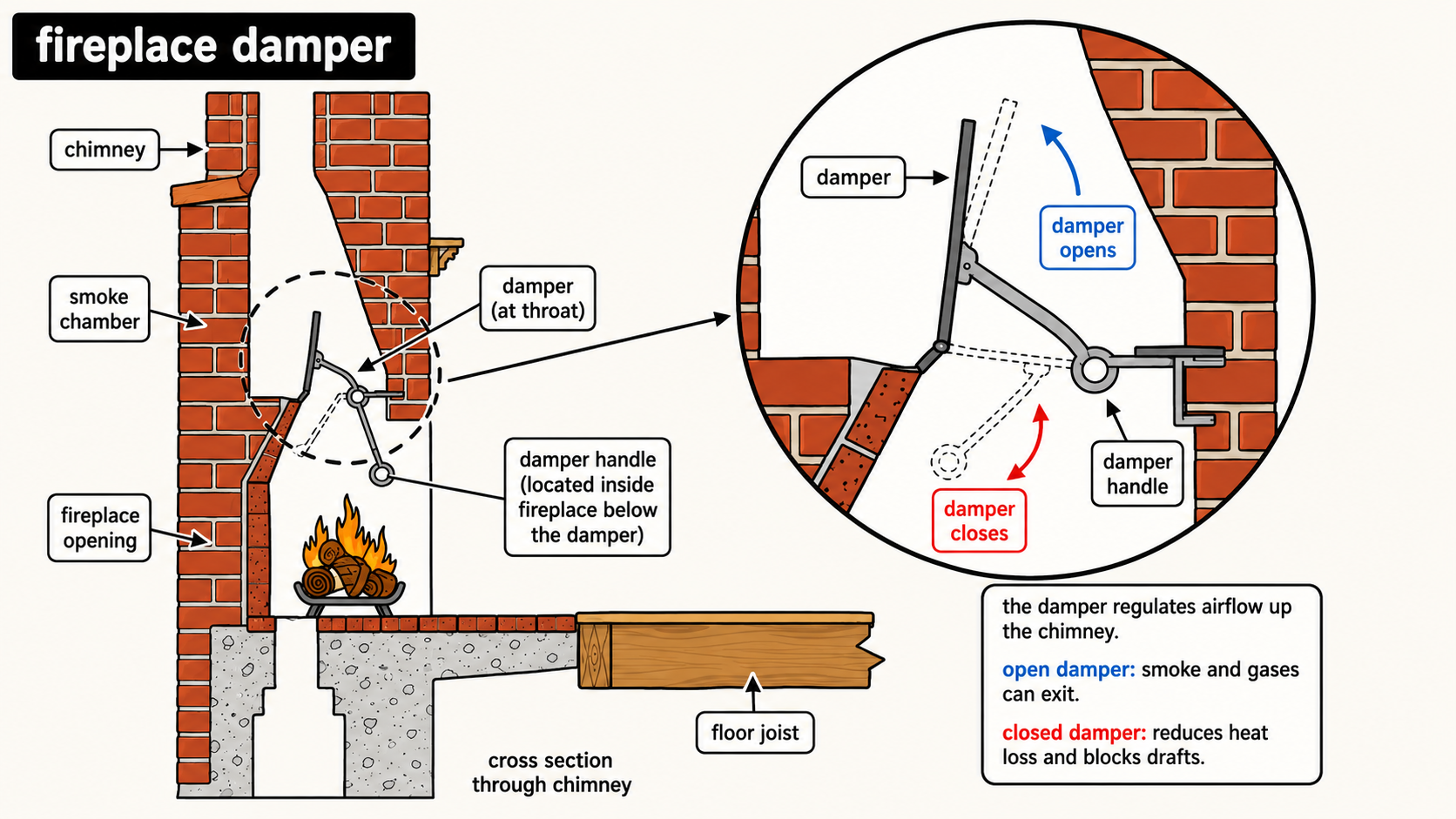
The more traditional style of damper, located inside the smoke chamber of the fireplace, never makes a great seal, but it’s better than nothing. If it’s there, close it.
And if the fireplace is equipped with glass doors, close ’em. Again, it won’t be a perfect seal, but better closed than open.
Assuming you’ve already done the obvious stuff and your chimney is still stinky, consider installing a Chimney Balloon. This is exactly what you might imagine; it’s a big, rugged balloon that you stuff up your chimney and then inflate. These are effective, removable, and economical.

They won’t work for every chimney, and you need to remember to remove it before lighting a fire.
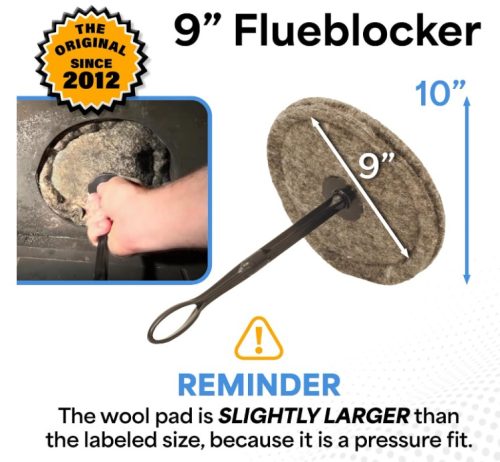
A similar product is a wool fireplace plug. If you can find one that fits, this is also a great solution.
And finally, let’s not forget about cleaning the chimney. If you have excessive soot in the flue, hire a Certified Chimney Sweep to clean it. Not only will this help to reduce odors, but more importantly, it’ll reduce the risk of a chimney fire.
No responses to “Why does my fireplace stink in the summer?”
No comments yet.
RSS feed for comments on this post. TrackBack URL
Leave a Reply