
Quick answer: A plumbing vent is a pipe that connects your drain lines to the outside, usually through the roof. Its job is to protect the trap under each fixture: without a vent, draining water can siphon the water out of a trap, and an empty trap lets sewer gas into the house. Vents don’t make fixtures drain faster; an unvented drain actually drains slightly faster. A gurgling drain is a common sign of a missing, blocked or improperly installed vent.
Plumbing vents protect plumbing traps. They don’t make fixtures drain faster; in fact, they do the opposite.
What is a plumbing vent?
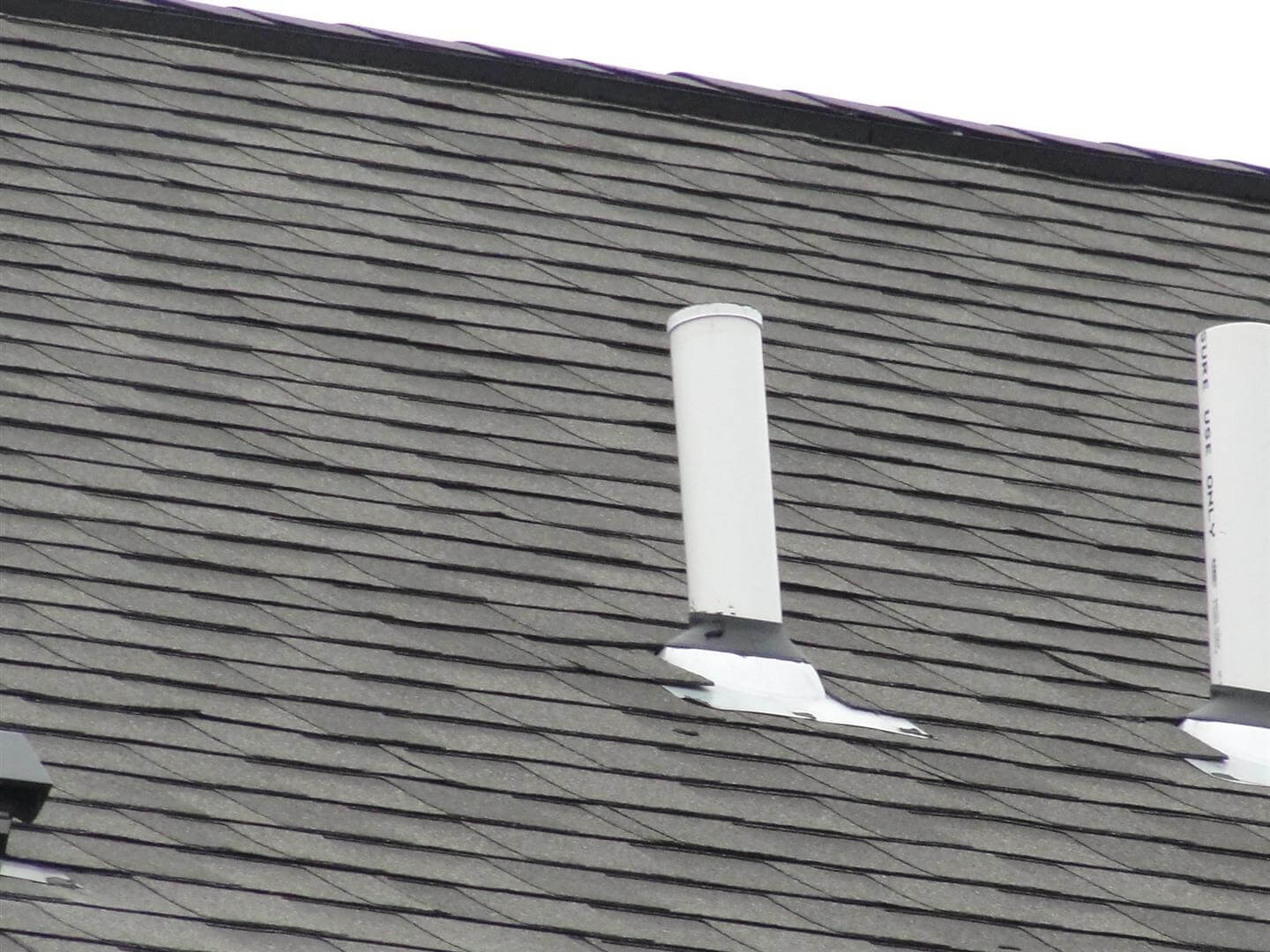
When it comes to first time home buyers, one of the least understood components of a home seems to be plumbing vents. They’re those pipes sticking up out of the roof that run through the attic and through the rest of the house. All residential plumbing fixtures need to be protected by a plumbing vent. Vents are frequently connected together inside the attic, which allows for fewer penetrations in the roof.
What does a plumbing vent do?
Let me repeat that: plumbing vents prevent traps from being siphoned. They also prevent back-pressure on traps, but today the focus is on siphoning.
Do plumbing vents make drains faster?
You may have heard that plumbing fixtures will drain faster when they’re vented properly, but it’s not true. The common, improper analogy is to talk about dumping a soda bottle upside down. You watch the water glug out while air replaces it, and this makes it drain slowly. Once you put a hole in the top, water drains out very quickly because air can replace the water as it drains.
This analogy doesn’t hold water because the top side of every plumbing fixture is wide open. The top of a toilet is open. The top of a sink is open. The top of a bathtub is open. If you wanted to re-create the soda bottle analogy, you would need to block off the top of the plumbing fixture and then try to drain the water out. I can’t think of any instance where this could possibly happen.
As I explained in my post on plumbing traps, every plumbing fixture has a trap, which prevents sewer gas from entering the building. When a lot of water drains through a plumbing fixture, it can be enough water to create a siphon effect, which has the potential to pull water right out of the plumbing trap. In my blog about S-traps, I included a quick video clip of an unvented drain having water siphoned out of it, leaving the trap with far less water than it should have had.
To help demonstrate this, I made a video showing the difference between a vented drain and an unvented drain. I used clear tubing for simplicity, but the physics are the same. You’ll notice that the unvented fixture actually drained about 2 seconds faster than the vented drain. This is because the water that had left the fixture was helping to pull water out. With a vented fixture, there’s no pull. The vent allows water to pull air instead. Check it out:
Why does a drain gurgle?
If you hear a gurgling noise after water has drained out of a fixture, what you’re hearing is air getting siphoned through the trap. This happens when there is no vent present, the vent is obstructed, or the vent is improperly installed. Air admittance valves are devices designed to take the place of individual fixture vents without running pipes through the roof. I cover them in my post on air admittance valves.
Plumbing vent FAQ
What does a plumbing vent look like?
From outside, it’s the pipe sticking up out of your roof. Inside, vent pipes run up through the walls and the attic, and several vents are often connected together in the attic so fewer pipes have to go through the roof.
Does every plumbing fixture need a vent?
Yes. All residential plumbing fixtures need to be protected by a plumbing vent, or by an approved alternative like an air admittance valve.
Do plumbing vents help drains flow faster?
No. The top of every sink, tub and toilet is already open to the air, so the “soda bottle” comparison doesn’t apply. In the video above, the unvented drain emptied about 2 seconds faster than the vented one. A vent’s job is to keep the trap from being siphoned dry, not to speed up draining.
Why is my drain gurgling?
Gurgling after water drains is the sound of air being pulled through the trap. It usually means there’s no vent, the vent is blocked, or the vent wasn’t installed correctly. Have a plumber take a look.
What is an air admittance valve?
A device designed to take the place of an individual fixture vent without running a pipe through the roof. Learn more in my post on air admittance valves.
Related Posts:
- Plumbing Traps
- S-Traps
- Plumbing vents covered with frost
- Damaged plumbing vent flashing
- Chewed up plumbing vents (darn squirrels)
Enjoyed this post?
Get new posts by email. No spam, unsubscribe anytime.