
Quick answer: Don’t connect a downspout directly into an underground yard drain. In a Minnesota winter the drain can fill with ice, and the water backs up at the house, sometimes right into the basement. Instead, have the downspout end about an inch above a drain receptor at the top of the buried pipe. If the drain ever freezes, water can spill out onto the ground instead of backing up against the foundation.
Why do downspouts need to drain away from the house?
One of the main jobs of gutters is to direct water away from the building, which helps to prevent wet basements and foundation problems. When downspouts drain right next to the building, water gets concentrated to one location, which is usually worse than no gutters at all. I’ve said it before and I’ll say it again: downspout extensions are important. Downspouts should discharge at least six feet from the building.
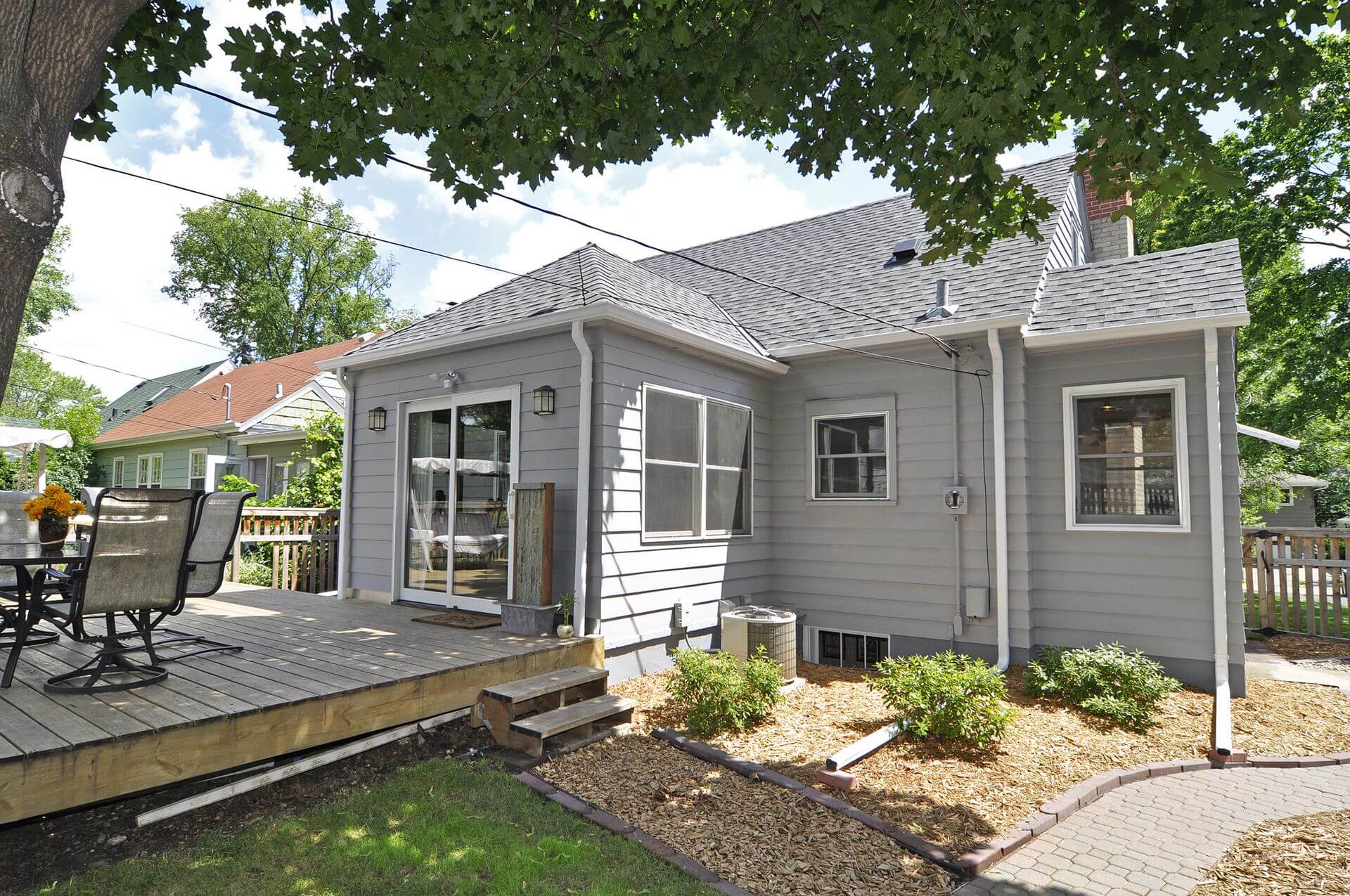
The photo below shows a nice example of a house with long downspout extensions carrying water a good distance away from the house.
How can you get rid of visible downspout extensions?
 Some people prefer not to have the downspout extensions so visible. Dealing with the walkway can also be an issue; the easy options are to create a trip hazard by running the downspout across the walkway, or a slip hazard by stopping the downspout short of the walkway, which will make for an icy mess in the winter.
A better solution is to have the downspouts discharge into yard drains, which most commonly consist of black corrugated 4″ tubing, shown at right. This tubing gets buried in the yard and eventually terminates at a lower point, allowing water to drain away from the building.
Can you connect a downspout directly to a yard drain?
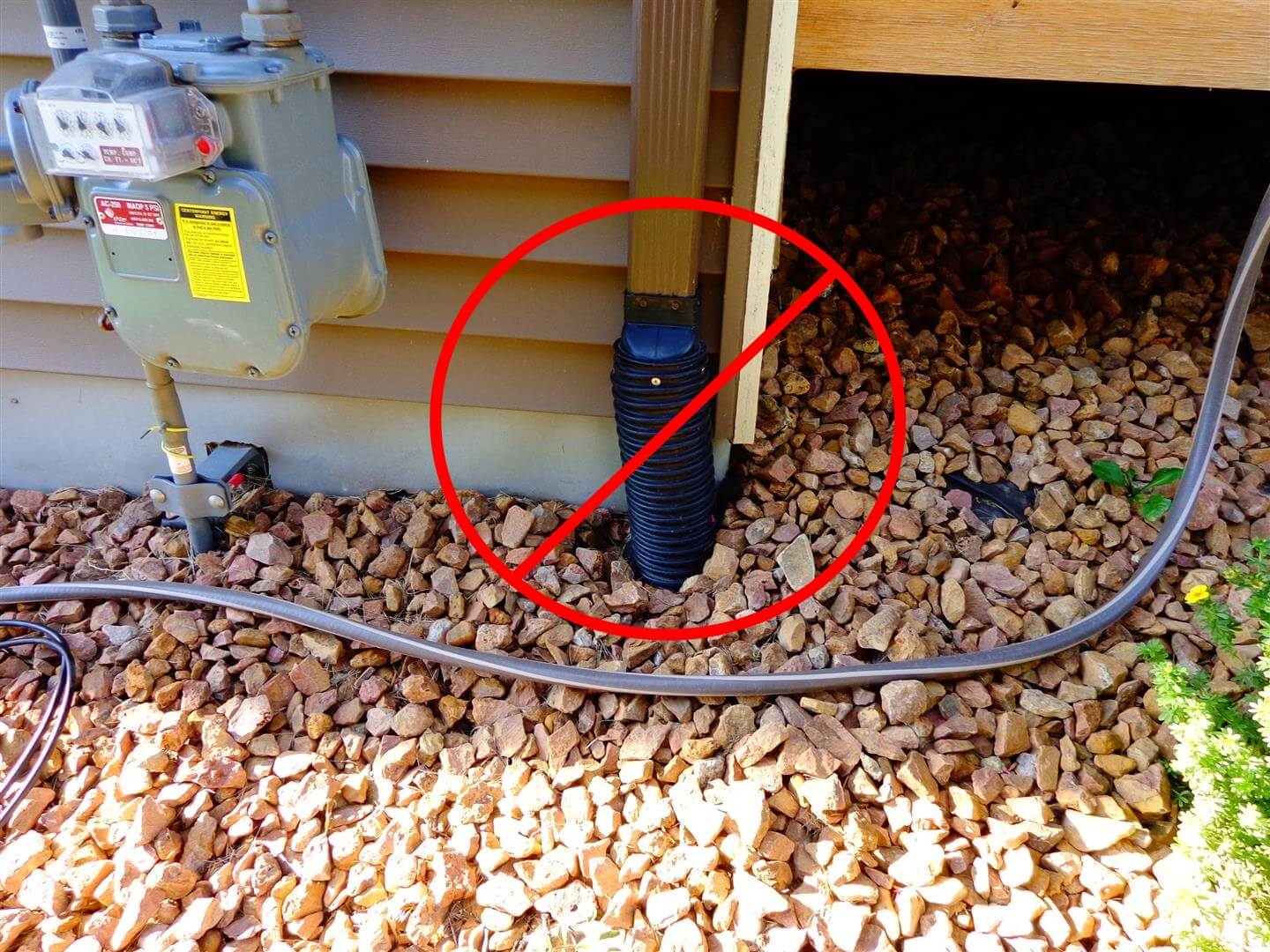
No. Just like the discharge tubing from a sump pump, connecting a downspout directly into an underground drain can allow for ice to back up. While a blocked sump pump discharge can lead to a wet basement, so can blocked downspouts.
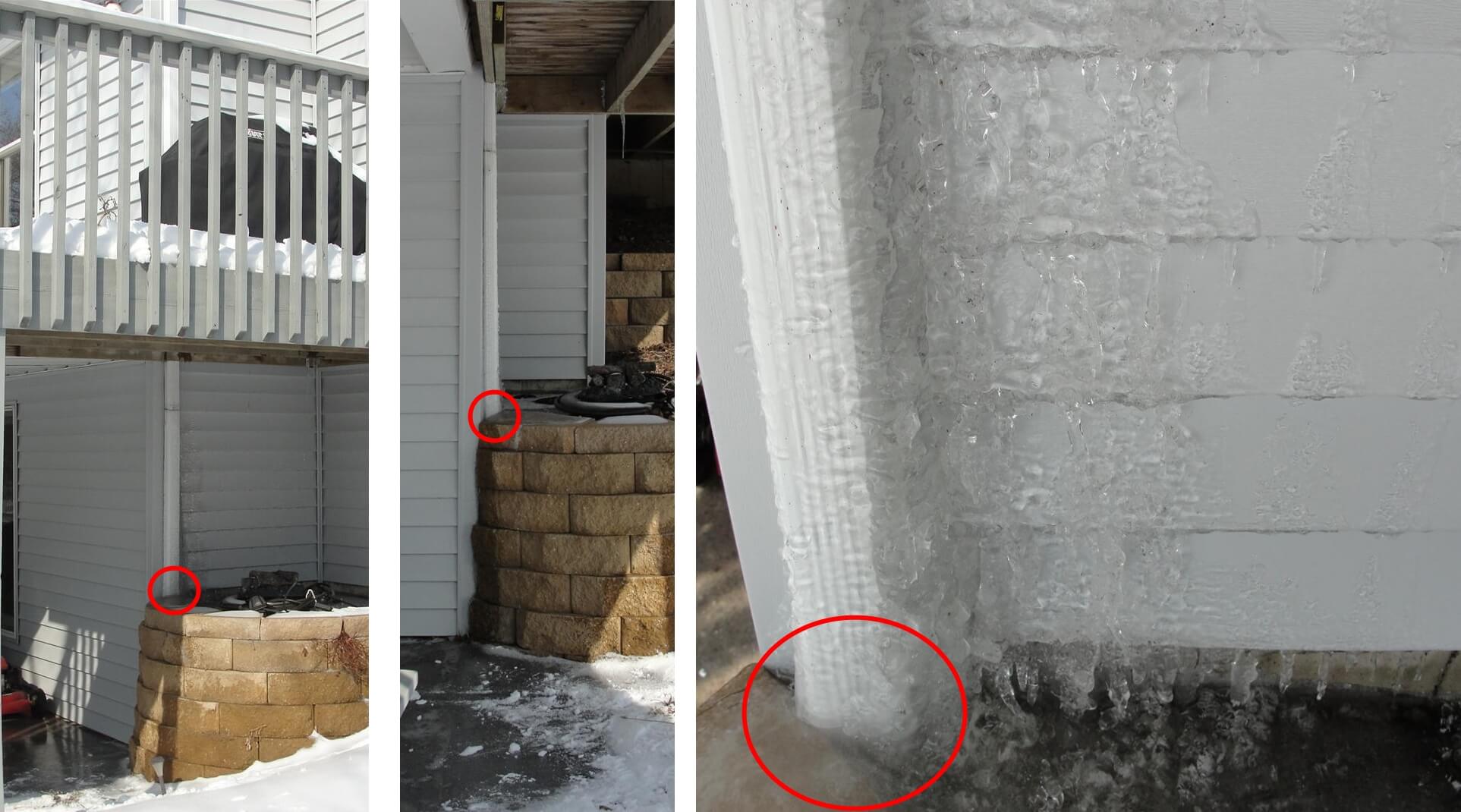
The home pictured below had a downspout discharging directly into an underground yard drain that filled with ice, and it ended up leaking a lot of water into the basement during the course of my inspection.
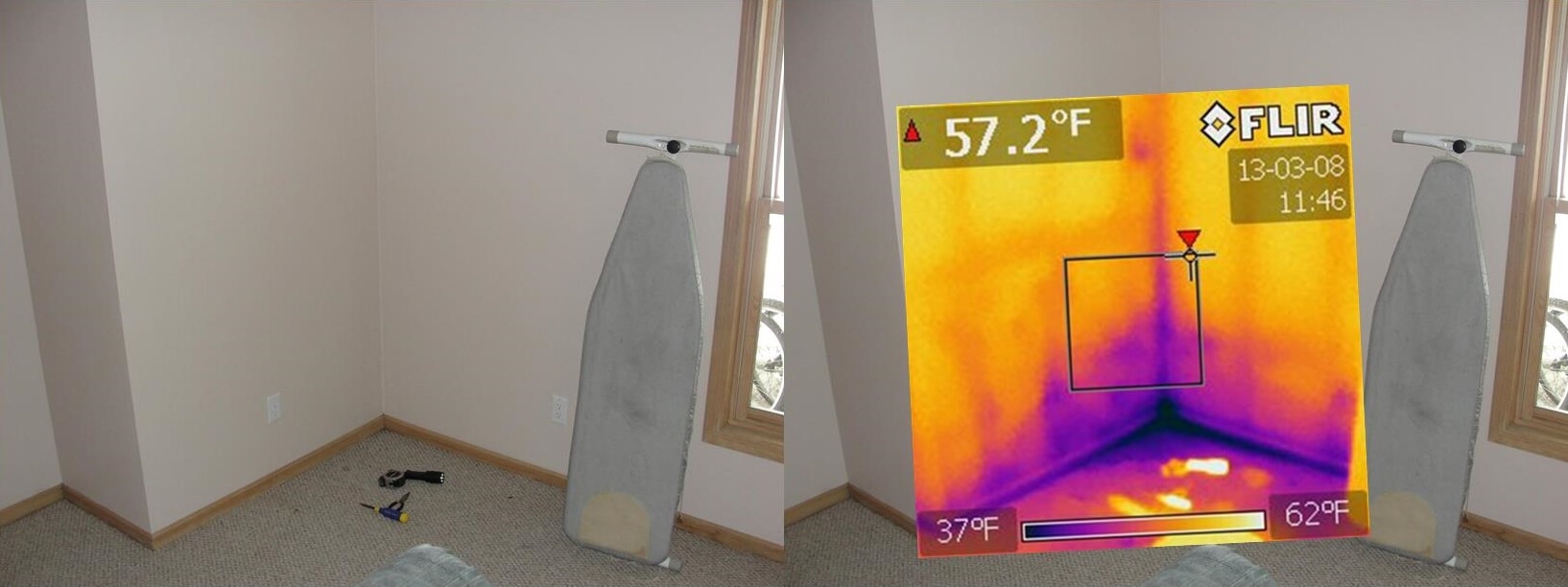
The infrared image of the same corner in the basement shows how wet the wall was during the inspection, all as a result of ice backing up and finding its way into the house.
How should a downspout connect to a yard drain?
This water intrusion could have been avoided by having the downspout discharge to a drain receptor instead. While this may appear to be a direct connection, the downspout shown below ends approximately 1″ above the top of the drain receptor. From there, a yard drain takes the water to a lower point in the yard.
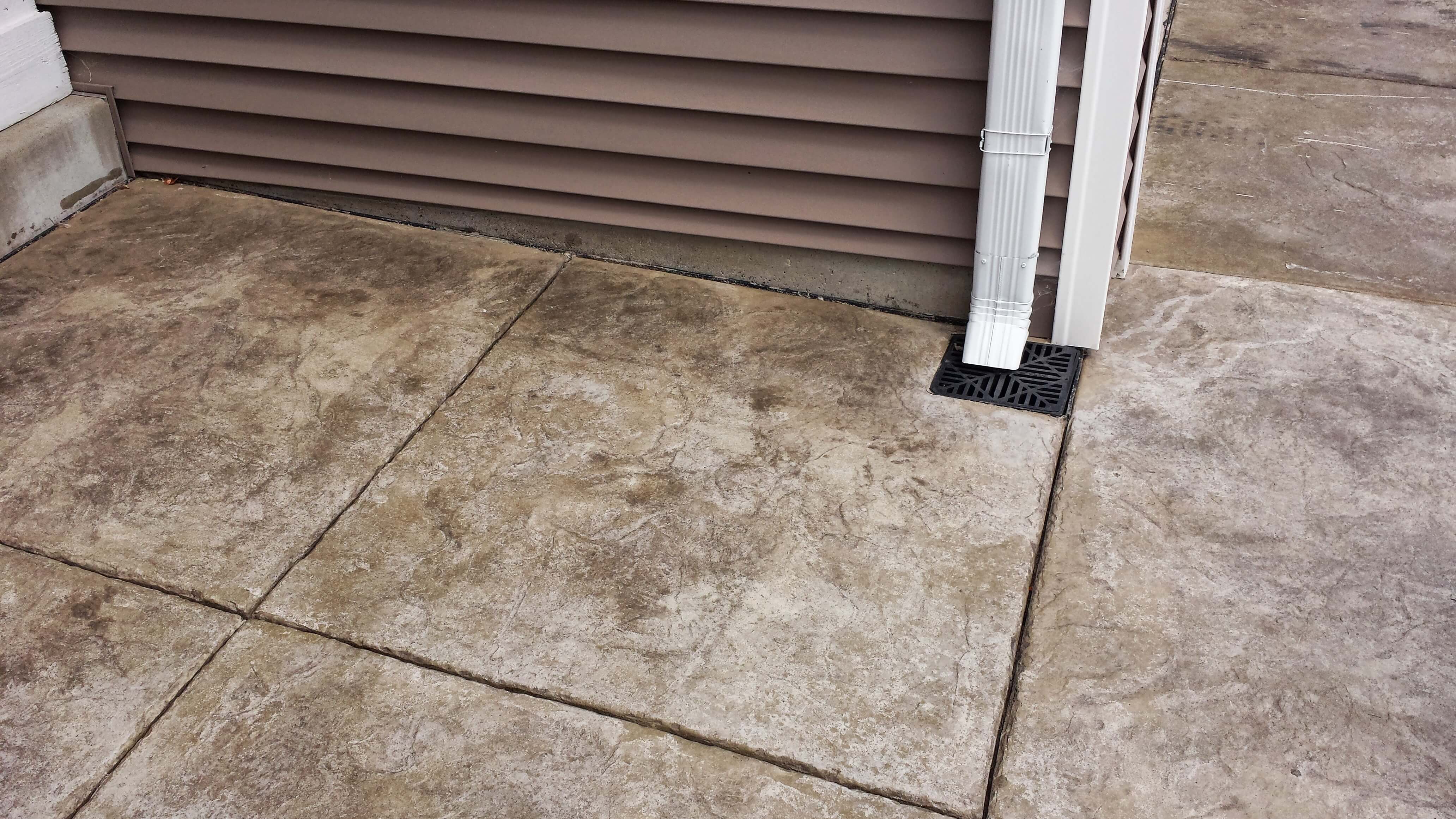
It obviously takes some planning to get a system set up like this, but this is a great way of managing water from downspouts, and it’s especially easy to do with new construction before the walkways are poured.
Downspout and yard drain FAQ
What kind of pipe is used for a yard drain?
Most yard drains are black corrugated 4″ tubing, buried in the yard. However, the best yard drains consist of smooth, thin-wall PVC pipe to help prevent blockages.
Where should a yard drain end?
At a lower point in the yard, far enough from the house that the water drains away from the building instead of back toward it.
Can a sump pump discharge go into a yard drain?
It can, but the same rule applies: don’t connect it directly. A sump pump discharge line that’s hard-piped into a buried drain can freeze and back up just like a downspout.
How far should downspouts extend from the house?
Downspouts should discharge at least six feet from the building.
Enjoyed this post?
Get new posts by email. No spam, unsubscribe anytime.
Aaron
August 9, 2013, 7:21 am
It seems to me that in either of your preferred setups (the long gutters, or the gap), snow and ice could easily freeze in the long gutter or in between the gap and cause the same problem. For example, I previously had a short gutter run and it got covered with snow and froze in the winter, causing a problem like the one you describe here. Does one have to keep the end of the gutter (or the gap) free of ice in the winter?
Reuben Saltzman
August 9, 2013, 1:13 pm
Hi Aaron,
Yes, the downspouts could certainly still fill with ice; it’s happened to me. I don’t know of any cure-all solution, short of installing heat cables in the gutters. I’ve never tried keeping the bottoms of the gutters cleared of ice.
Tim
August 14, 2013, 1:40 pm
This is great info! What type of contractor does someone contact to see if this is an option? Needing to go under a paved walkway probably requires some special drilling tools/options?
Reuben Saltzman
August 14, 2013, 1:42 pm
Tim – contact a landscape contractor. I’ve heard of the trench being buried below an existing walkway, but I don’t know how it’s done.
Dryman
August 30, 2013, 7:19 am
Only the surface laid leg extensions are right here. ANY underground pipe that comes to within 2-ft of a structure is an active flood doing CONSTANT damage to the foundation, water finally entering the living space or showing signs inside is just a matter of time to find or make water paths. ALL ground pipes must be shallow & have a pitched 3-ft by 3-ft (minimum) water reflector buried right underneath it to contact the structure & ensure no water ever can head toward the structure. I had abundant wall damage, musty smell, the basement collected up to a foot of water with most rains & sump pumps died annually. Then, I decided to do what none of these “Dry Basement” CROOKS won’t ever do. I spent 3-hours digging out my ground pipes within 6-ft of the house & put on downspout leg extensions. Now, I’m completely dry all of the time & got rid of the sump pump along with CONtractors for anything else ever!
Reuben Saltzman
August 30, 2013, 11:54 am
@Dryman – I’m glad you were able to fix your problem, but I disagree with your hard line approach to water management. You said “ANY underground pipe that comes to within 2-ft of a structure is an active flood doing CONSTANT damage to the foundation, water finally entering the living space or showing signs inside is just a matter of time to find or make water paths.” That’s simply not true.
Home Inspections and Infrared Cameras | Structure Tech Home Inspections
September 19, 2013, 3:47 am
[…] recently shared this photo in my blog post about not connecting downspouts directly to yard drains, but here it is again. The blue area is […]
Photos from New Construction Home Inspections, Part III | Structure Tech Home Inspections
November 17, 2013, 2:50 pm
[…] also wrote a blog post this year about connecting downspouts directly into yard drains; this is a bad practice that can lead to water backing up the downspout during the […]